The American consumer is not weakening evenly. It is splitting in two, and a New York Fed survey released Monday shows why.
The share of households that say their finances are much worse than a year ago jumped to 13.3%, the highest reading since July 2022. Counting everyone who feels somewhat or much worse off, the figure reached 43.7%, the worst since January 2023. One-year inflation expectations held at 3.5%, with the Iran conflict pushing gas prices higher just as the May inflation report lands Wednesday.
Stressed shoppers do not stop spending. They trade down. And the stock market is sorting retailers into winners and losers along exactly that line.
The trade-down winners
Look at where the money goes when budgets tighten.
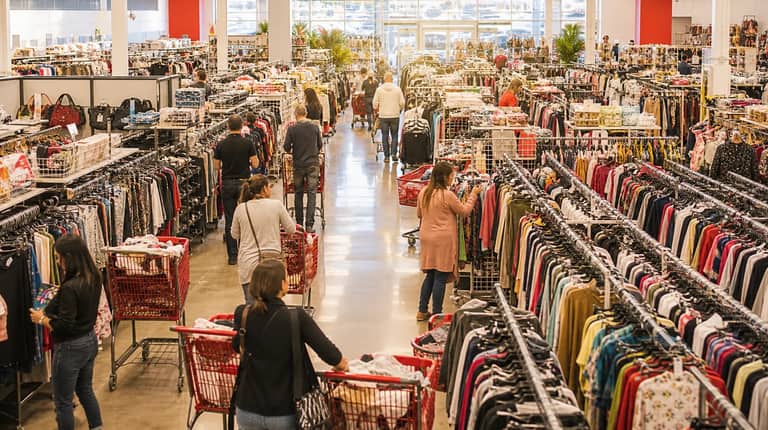
Ross Stores sits near its 52-week high even after slipping Monday. The off-price chain posted record annual sales of $22.8 billion, comparable-store sales up 5%, and earnings of $6.61 a share. Management raised the dividend 10% and authorized $2.55 billion in buybacks. When people hunt for deals, off-price thrives.
Costco tells a similar story from the warehouse end. The membership model locks in repeat traffic, and the stock holds a $432 billion market value. Investors pay roughly 50 times earnings for it, a premium that exists precisely because shoppers renew their memberships in good times and bad.
Value chains round out the group. Target trades around 13 times earnings with a dividend yield near 3.7%, far cheaper than the warehouse names, and it has climbed well off its 52-week low near $83. Macy's sits near its own 52-week high at roughly 7 times earnings after beating estimates, with Bloomingdale's comparable sales up more than 10%. Cheap and improving is a combination this tape rewards.
The premium losers
Now the other side of the split.
Lululemon is the clearest example. The athleisure brand trades around $116, near a 52-week low and down roughly 65% from its high above $338. The company cut its full-year guidance on soft North American demand, the first major discretionary name to crack. At a market value near $13 billion, it is no longer priced as a growth story.
Ulta Beauty shows the same strain in a less dramatic form. Even after a strong quarter, the stock trades around $466, far below its 52-week high near $715 and under its 200-day average. Premium beauty is holding up better than premium apparel, but it is still derating.
The pattern is consistent. Aspirational brands that depend on shoppers stretching their budgets are getting repriced. Names that win when shoppers pull back are not.
What to watch
Wednesday's May inflation report is the next test. A hot number, with oil running higher, deepens the squeeze on household budgets and reinforces the trade-down trade. A cool number could give premium names some breathing room.
The other tell is guidance. Lululemon already warned. If more discretionary brands follow when they report, the split widens. If the cracks stay contained to a few names, the bifurcation stays a stock-picking story rather than a signal about the whole consumer.