That creates a clear test for BWXT's second-quarter report after Monday's close and its 5:00 p.m. ET earnings call. But management can now show whether the deal is adding sales, requiring more cash, or remains an investment whose payoff is still ahead.
PCG changes the production base
PCG generated about $125 million of revenue in 2025. That was less than 4% of the company's $3.20 billion of revenue last year, so the deal is unlikely to change its scale overnight.
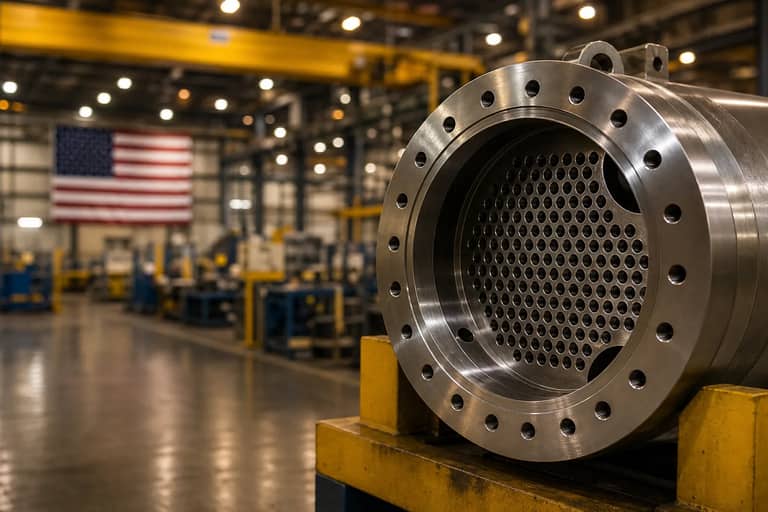
Its larger value is physical capacity. The acquired unit brought more than 500,000 square feet of U.S. heavy-manufacturing space, along with more than 400 employees. The purchase added a way to make more commercial nuclear components, rather than simply a small block of annual sales.
Nuclear work can be constrained by factories, qualified labor, customer approvals, and long production schedules. Added floor space and skilled workers could help the business take on work that would otherwise have stretched existing operations. But capacity produces value only when it is filled with profitable, funded work.
Its existing business gives the acquisition a solid base. In 2025, the company generated $574 million of adjusted EBITDA and $295 million of free cash flow.
The acquisition must eventually improve one or both measures. More revenue alone would be an incomplete answer if integration costs, working-capital needs, or added spending absorb the cash benefit.
The forecast was built without the deal
BWX Technologies completed its Precision Components Group acquisition on July 6, yet its published 2026 forecast excludes the acquired business. After the first quarter, management raised its 2026 adjusted EBITDA outlook to $650 million to $665 million, from $645 million to $660 million. It also lifted its non-GAAP earnings-per-share range to $4.60 to $4.75 from $4.55 to $4.70.
The free-cash-flow target moved to $315 million to $330 million from $305 million to $320 million. Revenue guidance was set above $3.75 billion, compared with a prior outlook of about $3.75 billion.
That makes the outlook unusually useful. A maintained forecast would show the legacy operations still expect to deliver the plan set after the first quarter. It would not prove that the new unit is adding nothing. Management may wait for more than a few weeks of ownership before changing annual targets.
A higher outlook or a specific contribution would offer stronger evidence that the deal is helping earlier than expected. A lower cash target would point in the other direction. It could mean the business expects integration or operating needs to consume more cash before the added capacity produces a return.
Investors should also separate a reported second-quarter contribution from the full economic value of the acquisition. The first full quarter of ownership should provide a cleaner read on sales, margins, and cash conversion.
Cash is the harder measure
The company reported first-quarter revenue of $860.2 million and adjusted operating earnings of $148.0 million. Net income was $91.2 million, while GAAP diluted earnings per share were $0.99 and non-GAAP earnings per share were $1.12.
Those results explain why management had room to raise its targets. They do not answer whether a newly acquired manufacturer will improve cash generation on the same timetable as reported earnings.
A manufacturer may need to buy materials, retain workers, prepare equipment, and carry work in process before a customer payment arrives. The added plants and staff may create those needs before they create a meaningful contribution to free cash flow.
That is why the cash target deserves more attention than a modest near-term lift in sales. The company already expects $315 million to $330 million of free cash flow this year. If it can retain that range while integrating the new unit, it would signal that existing operations can support the purchase without disrupting the year's cash plan.
Investors need a direct answer on whether near-term cash expectations changed and whether PCG is included in updated guidance.
- A maintained cash range would support the existing operating plan, though it would not yet prove the deal is accretive.
- A disclosed contribution would help separate acquired revenue from growth in the older operations.
- A cut to cash expectations would make the cost and timing of integration the central issue.
Backlog supports demand, not immediate cash
The company ended the first quarter with $8.65 billion of backlog. That gives it substantial visibility into future work. Yet $2.37 billion of the total was unfunded backlog tied to U.S. government work.
That limits what the headline backlog figure can tell investors about the acquisition.
The commercial nuclear capacity acquired through PCG may eventually help the business convert more orders into manufactured components. But a backlog total cannot establish when customers will authorize work, when production will begin, or how much cash the company must invest before it is paid.
Its government business also follows a different path from commercial work. The company should not be judged as though all backlog has the same funding timeline or margin profile. More useful evidence would show whether funded work is entering production and whether commercial orders are using the added facilities.
A higher backlog number without more detail would therefore be less informative than an update on customer funding, production schedules, or cash conversion. Those measures show whether demand is moving from a future possibility into revenue that can support the expanded manufacturing base.
Margin evidence may take longer
PCG can add capacity before it lifts profit margins. The company may need time to align the acquired workforce, production processes, and customer work with its wider operations.
Commercial Operations margin will be one useful signal if management discusses it. A margin measures how much of each revenue dollar remains after the direct costs of producing the work. An improving result alongside the unit's first contribution would suggest the new capacity is supporting economics as well as sales.
The second quarter may be too early for a clean conclusion.
The acquired business was owned for only part of the period, and the backlog includes a material amount of government work that still needs funding. A weak or unchanged margin in this report would not by itself disprove the acquisition case. It would, however, extend the period in which investors must take the deal's promise largely on management's word.
The stronger countercase is straightforward. The company may have acquired useful factories and labor before demand is ready to fill them at attractive returns. If commercial work takes longer to arrive, or if integration draws more cash than expected, the deal could dilute near-term returns even while adding long-term capacity.
Monday's release and call should provide the first clues. The next decisive test is whether management identifies its contribution and preserves its cash target as the business moves into its first full quarter inside the company.