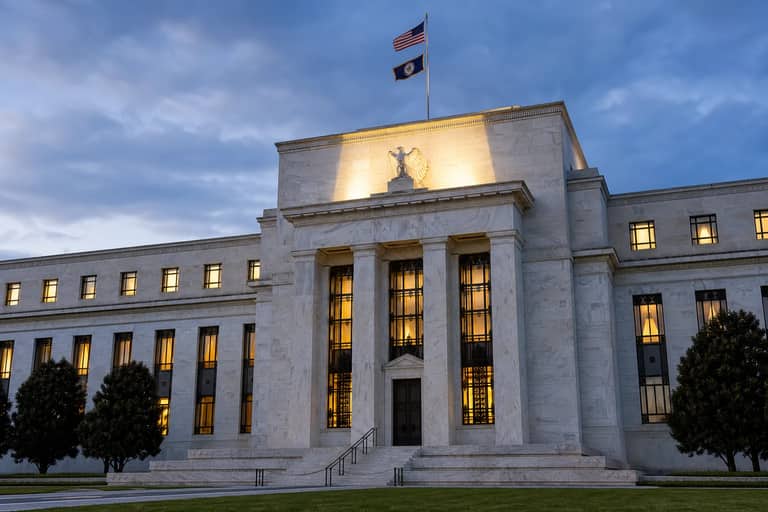
The Federal Reserve kept its policy rate at 3.50% to 3.75% on Wednesday, but three officials wanted to raise it immediately. Beth Hammack, Neel Kashkari, and Lorie Logan each voted for a quarter-point increase.
The hold was widely expected. The split was the real news. A rate increase is now part of the committee's active debate, and the next inflation and jobs reports will decide whether those three officials remain isolated before the September meeting.
That raises the bar for rate-sensitive stocks and borrowers hoping for relief.
A Hold With a Clear Warning
The Federal Open Market Committee approved the hold by a 9-3 vote. That is a large minority for an immediate move, even though it falls short of a majority. The practical message is that policy will remain tight unless incoming data give the Fed stronger evidence that inflation is cooling.
A quarter-point move may sound small, but the federal funds rate is the base rate for much short-term borrowing. It affects floating-rate debt, business credit lines, and many bank loan rates. It also influences Treasury yields that set a broader benchmark for mortgages, corporate borrowing, and asset values.
The Fed did not say another increase is coming. It did make clear that the case for holding steady has become harder to defend if price pressure stays high and the economy keeps expanding.
That is a different setup from a routine pause. A routine pause gives investors time to look ahead to eventual cuts. This one leaves markets facing the possibility that the next policy move could be higher rather than lower.
Inflation Is Still Far From the Fed's Goal
The dissents have a straightforward basis in the data. Headline PCE inflation rose 4.1% over the 12 months through May. Core PCE inflation, which excludes food and energy, rose 3.4%. Both measures remain above the Fed's 2% inflation target.
The Fed said supply shocks have raised prices in sectors including energy. That gives policymakers some reason to be careful about treating recent inflation as a broad demand problem. Energy shocks can fade if supply conditions improve.
Core inflation complicates that argument.
Because core PCE strips out energy and food, its elevated reading suggests the inflation issue reaches beyond volatile commodity prices. The Fed does not need to conclude that every price category is accelerating to worry that inflation is settling too high above target.
The economy has also not given the Fed a clean reason to relax. Real gross domestic product grew at a 2.1% annual rate in the first quarter. The unemployment rate was 4.2% in June and had changed little since last summer. Those figures point to an economy that is still growing and a labor market that remains broadly stable.
That combination gives officials room to focus on inflation. A sharp slowdown in jobs or output would force a more difficult tradeoff. The data cited by the Fed do not show that sharper slowdown yet.
Consumer Spending Is the Main Counterweight
The case for patience is not weak. Household consumption rose at a 1.3% average annualized rate through the first five months of 2026. That is a modest pace relative to the broader economy's first-quarter growth.
Slower consumer spending can reduce demand over time. If businesses face softer sales, they may have less room to keep raising prices. That would allow inflation to cool without another increase in borrowing costs.
The timing is the difficult part.
Monetary policy works with delays. Higher rates can restrain spending and investment before their full effect appears in inflation data. The three dissenters appear unwilling to wait for that possibility if current inflation readings stay well above target.
The Fed's statement also ties part of the inflation problem to supply shocks. If energy-related pressures ease, headline inflation could fall without a meaningful change in household demand. That outcome would strengthen the argument for keeping rates where they are.
But a decline in headline inflation alone may not settle the debate. Officials will likely need to see improvement in measures that exclude energy as well. Otherwise, a lower energy bill could mask price pressure elsewhere in the economy.
Short-Term Rates Set the Financial Tone
Investors should not confuse a steady policy rate with unchanged financial conditions. The Fed said Treasury yields and the market-implied expected path for the federal funds rate had risen since the start of the year. The largest increases were in shorter-maturity Treasury securities.
That matters because markets can tighten financing conditions before the Fed acts. Companies that must refinance debt soon face the interest-rate environment available at that time, not the rate that prevailed when they first borrowed. A higher short-term yield can raise the cost of rolling debt or funding inventory and payroll.
Cash-rich companies are better placed to absorb that pressure.
Businesses with fixed-rate debt and ample cash have more flexibility to wait for better financing conditions. Companies that rely on bank credit lines or have near-term refinancing needs have less room. The difference can show up in interest expense, free cash flow, and the amount available for investment or shareholder returns.
Higher short-term rates can also pressure long-duration growth stocks. Those companies are valued heavily on profits expected years from now. When rates rise, investors use a higher discount rate to calculate the value of those future profits, which can reduce the value assigned to them today.
That does not mean every growth stock moves with Treasury yields on a given day. Company earnings, valuations, and business quality still matter. It does mean the rate backdrop becomes less forgiving if investors keep raising their expectations for policy before September.
Reserve Purchases Are Not Rate Cuts
The Fed also kept its ample-reserves policy. Under this approach, banks hold enough reserve balances at the Fed to meet payment needs without relying on stressed short-term funding markets.
Effective Thursday, the Fed will pay 3.65% interest on reserve balances. It will also continue buying Treasury bills and, if needed, Treasury securities with maturities of three years or less to maintain ample reserves.
Those operations can sound like stimulus. They are not the same as a broad easing of monetary policy.
The purpose is to maintain smooth functioning in bank funding and payment systems. The policy rate remains unchanged, and the Fed has not announced a reduction in borrowing costs. Banks may benefit from a more stable funding backdrop, while households and businesses with floating-rate loans or refinancing needs still face tight credit conditions.
This distinction is useful for financial stocks. Stable reserves can reduce the risk of stress in short-term funding markets. They do not automatically improve loan demand, lower credit costs, or create the same conditions as a policy-rate cut.
Investors assessing banks should separate the health of funding markets from the direction of lending economics. Those are related, but they are not interchangeable.
The September Test Is Coming Into View
The next PCE inflation report and the August employment report will shape the September debate. The central question is whether inflation slows enough to validate Wednesday's hold while the labor market remains stable.
A softer inflation reading, especially outside energy-related effects, would weaken the case for an immediate increase. Slower consumption offers a plausible path to that outcome. It would suggest that existing rates are applying enough restraint to demand.
Steady jobs and sticky inflation would point the other way.
If inflation remains elevated while unemployment stays near recent levels, the three dissenters may find more support. A fourth vote would not guarantee an increase, but it would show that the July split was becoming a broader committee view rather than a warning from a minority.
The more serious countercase is a meaningful weakening in employment. That would make an additional increase harder to justify, even if inflation takes longer to fall. The Fed is balancing two risks: allowing price pressure to become entrenched or tightening into a slowing economy.
September will turn on whether the next data show cooling inflation, weakening demand, or an economy still firm enough to absorb tighter policy. Wednesday's vote made that evidence far more consequential for rate-sensitive assets than the unchanged rate itself.