Yemen’s Houthi rebels said Monday they will impose a maritime embargo on Saudi Arabia. The announcement puts Saudi crude exports at risk from a second direction, just as traffic through the Strait of Hormuz remains constrained.
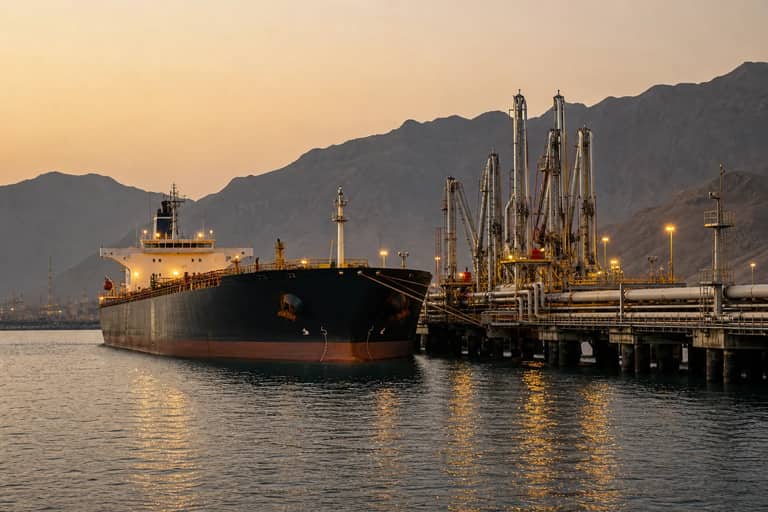
Saudi Arabia had used its East-West Pipeline to move crude across the kingdom to Red Sea export terminals. That route gave Saudi barrels a way around the Gulf exit. Now the pipeline may still move oil inland, but the ships needed to carry that oil onward face a new threat near the Red Sea terminals.
The immediate issue is not whether the pipeline stops operating. It is whether tankers continue loading Saudi crude from Red Sea terminals. If they do, the route remains a partial release valve. If loadings fall while Hormuz traffic stays constrained, Saudi Arabia has far fewer ways to redirect exports.
This changes the oil market’s problem. A disruption at Hormuz had already restricted a major outlet for Gulf supplies. A credible threat to the Red Sea route weakens the region’s main bypass. The risk is no longer confined to one narrow waterway.
A Bypass With Hard Limits
The available pipeline capacity was never large enough to replace normal Gulf exports. The U.S. Energy Information Administration estimates that Saudi and UAE pipelines can bypass about 4.7 million barrels a day.
That figure is useful, but it needs context. The International Energy Agency reported total Gulf oil exports, including pipeline bypass volumes, at 16.1 million barrels a day in June. Before the war, Gulf oil exports averaged 24 million barrels a day.
June exports were therefore 7.9 million barrels a day below the prewar average. The bypass system helps move some barrels around Hormuz. It cannot restore the region’s usual export capacity on its own.
The Red Sea route mattered because it turned limited pipeline capacity into a usable export channel. Crude could cross Saudi Arabia by pipeline and then leave by tanker from the other coast. A maritime embargo threatens the second half of that chain.
That is the key point for investors weighing the supply risk. Pipeline capacity is not the same as delivered oil. A barrel moved to the Red Sea still needs a vessel, a loading operation, and a buyer willing to take delivery through a conflict zone. The pipeline remains valuable only if those links hold.
Markets can often handle a temporary loss of flexibility. They have a harder time handling a sustained loss of export capacity. The difference will show up in physical flows, not in the wording of the embargo announcement.
A steady pace of tanker calls and crude loadings from Saudi Red Sea terminals would indicate that the bypass remains functional. A visible decline would suggest that the region’s export problem has widened from constrained Gulf traffic to a broader shipping disruption.
The Supply Shock Can Spread
The IEA says Hormuz carried roughly one-fifth of global seaborne oil and gas transit before the conflict. That scale explains why disruption in the Gulf can affect more than oil producers.
When crude and liquefied natural gas flows face added risk, fuel and freight costs can rise. Those costs can then move through shipping networks and supply chains. Airlines and transport companies face higher fuel bills. Refiners that depend on imported crude may have fewer supply options. Consumer-facing businesses can face higher freight and energy costs.
The wider economic risk is renewed inflation pressure. Higher oil prices do not automatically produce a lasting inflation problem. The pressure becomes more serious if higher fuel and shipping costs persist long enough to affect the prices paid by businesses and households.
That distinction is especially relevant when markets are trying to judge whether an energy shock is temporary. A brief increase in freight or fuel costs can fade when shipping routes stabilize. A prolonged disruption can feed into transport costs, factory costs, and consumer prices over time.
Energy producers and oil-linked funds may benefit if the market places a sustained premium on supply security. The funds XLE and USO could be sensitive to a prolonged rise in oil-market risk, though their returns need not move in the same way.
The important word is sustained. A threat can lift oil prices before any physical shortage appears. But a price rise driven mainly by fear can reverse if ships keep moving and exports hold up. A lasting supply premium needs evidence that barrels are actually becoming harder to deliver.
That creates a split across the market. Companies that sell energy may gain from stronger pricing if export routes remain impaired. Businesses that consume large amounts of fuel, ship goods, or rely on imported inputs face the opposite pressure. The effect would also extend to sectors where freight costs are a meaningful part of operating expenses.
The market may be tempted to treat the Red Sea announcement as simply another headline from a conflict zone. The more consequential reading is that Saudi Arabia’s workaround is now under scrutiny. That route had helped limit the damage from constrained Hormuz traffic. If it becomes unreliable, the margin for error in global oil supply narrows.
Physical Evidence Will Decide the Story
An embargo declaration does not guarantee a durable fall in Saudi exports. The countercase is clear: tanker traffic may continue, Saudi Red Sea terminals may keep loading crude, and the East-West Pipeline may remain a workable outlet despite higher risk.
That outcome would limit the supply damage. Oil markets can react sharply to threats around a major shipping route, then retreat when physical exports continue. In that case, the announcement would add a risk premium without creating a lasting loss of delivered barrels.
Hormuz is the other variable. A recovery in Gulf traffic would reduce Saudi Arabia’s need to rely so heavily on the Red Sea route. Since Hormuz carried roughly one-fifth of global seaborne oil and gas transit before the conflict, restored traffic there could ease a large part of the current pressure.
The IEA’s July outlook had forecast a market surplus next year. It also warned that renewed hostilities could overturn that forecast. The Red Sea threat puts that warning into sharper focus because a lasting disruption would make a projected surplus less useful than it appears on paper.
A surplus forecast assumes that expected supply can reach buyers. If major export routes are constrained, barrels may exist but still fail to move where they are needed. That is why shipping conditions can matter as much as production forecasts during a regional conflict.
The opposing case has an equally observable test. If Red Sea loadings stay firm and Hormuz traffic recovers, the projected market surplus could again shape the oil outlook. Under that outcome, a supply premium tied to the embargo threat would be harder to sustain.
Watch the Barrels, Not the Rhetoric
The next test is operational. Investors should watch tanker traffic and crude loadings at Saudi Red Sea terminals, along with any change in Gulf export volumes. Those measures will show whether the embargo is disrupting oil flows or mainly raising the cost and risk of moving them.
The June export data already show a system operating below its prewar level: 16.1 million barrels a day, versus a 24 million barrel prewar average. The Saudi and UAE pipeline bypass capacity of about 4.7 million barrels a day provides some relief, but it cannot fully replace normal Gulf exports.
If Red Sea flows weaken while Hormuz remains constrained, the expected market surplus next year may matter less than the immediate shortage of workable export routes. If ships continue loading at Red Sea terminals and Gulf traffic improves, the shock may prove shorter-lived. The next signal will come from the movement of physical oil, not another announcement.