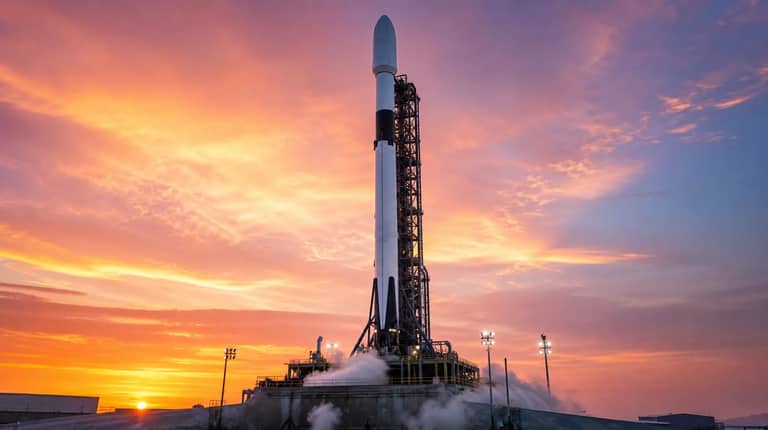
The timing could not look worse.
Yesterday the S&P 500 fell 1.6% to 7,267. The Nasdaq dropped nearly 2% to 25,170. Eight of 11 sectors closed lower after headline CPI hit 4.2%, a three-year high. The 10-year yield is around 4.55%. The FOMC convenes in five days with markets pricing near-certainty the Fed holds and rising odds of a hike by December.
Oracle showed what happens when even dominant results meet nervous capital. Record Q4 revenue of $19.2 billion, cloud infrastructure growth of 93%, and a backlog that jumped $85 billion in a single quarter to $638 billion. Adjusted earnings of $2.11 per share beat consensus by a wide margin. The stock still dropped roughly 7% after hours because full-year capital expenditures hit $55.7 billion and management announced a $40 billion debt-and-equity raise to fund what comes next. We covered the full breakdown last night.
A 4-handle CPI print, a record earnings report punished for spending too aggressively, and the Fed meeting next week. Into that, SpaceX goes to market.
At $135 per share, the company would debut on the Nasdaq tomorrow morning as one of the seven largest in the U.S. by market capitalization, surpassing Saudi Aramco's 2019 listing as the most capital ever raised in an IPO. Goldman Sachs leads the book. First trades are expected Friday under the ticker SPCX. What tonight determines is the opening premium and the signal it sends to every late-stage private company watching from the sidelines.
The question is not whether demand exists. It is what that demand reveals.
Markets punished Oracle for the cost of building, not for the absence of customers. Cloud infrastructure revenue nearly doubled. The backlog is contracted work, not speculative pipeline. Four of the largest AI spenders on earth, Google, Meta, OpenAI, and Anthropic, signed multi-year compute agreements last quarter alone.
The pattern holds for SpaceX. The S-1 shows Starlink generated $11.4 billion in 2025 revenue, more than 60% of the company total and the only division that turned a profit, earning $4.42 billion. By Q1 2026 Starlink's share climbed to 69% of revenue. Subscribers exceeded 5 million across more than 100 countries, with annual revenue growth above 50%.
This is not a rocket company that happens to sell broadband. It is a connectivity infrastructure platform with a recurring subscriber base, a reusable launch franchise, and a growing classified defense network. Government contracts across NASA, the Department of Defense, and the Starshield program provide revenue that does not depend on consumer sentiment or rate expectations.
This morning the market is telling the same story from a different angle.
Intel is up sharply in premarket. Applied Materials touched a fresh 52-week high of $534 during yesterday's session before the CPI reaction pulled it back to $497 by the close. It is climbing again this morning alongside Lam Research. Intraday records on a selloff day tell you where the structural bids are sitting. Yesterday's CPI hit everything. Today's bounce is concentrated in the companies that build infrastructure, not the speculative names that rode momentum higher.
Last Thursday we argued that Broadcom's 15% selloff was an expectations reset, not a fundamental breakdown. Chip equipment makers hit record highs within two sessions. The broader semiconductor group is snapping back again this morning. When the infrastructure buildout is genuinely cracking, you see order cancellations, backlog declines, and hyperscaler capex guidance cuts. None of those have appeared.
The number most investors are missing sits in the crude supply data.
U.S. stockpiles including strategic reserves fell by roughly 15 million barrels last week. Over five weeks the cumulative draw exceeds 70 million barrels, the steepest pace since the 1980s. The Strategic Petroleum Reserve has dropped below 360 million barrels, its lowest since April 2024, after roughly 50 million barrels were released since the conflict began.
The U.S. military has reportedly moved more than 100 million barrels past Iran's chokehold on the Strait. But the reserves funding those operations are draining fast. WTI is trading around $90 this morning. Brent is near $93. A second round of U.S. strikes on Iran overnight, with Tehran retaliating against military facilities in Bahrain and Kuwait, keeps the supply risk embedded in every barrel.
The inventory trajectory shifts the energy thesis from geopolitical premium to physical shortage. Domestic producers benefit most from a deficit that persists whether or not diplomacy succeeds. Diamondback Energy runs a pure Permian operation and trades near $197. ConocoPhillips rose nearly 3% yesterday while the broader market dropped. Energy was among the few S&P sectors to close higher.
So who buys SpaceX tonight?
The same capital that funded $55.7 billion in Oracle capex this year. The same institutions adding to chip equipment positions the morning after a CPI shock. The same defense budgets contracting Starshield before the stock even has a ticker.
Hot inflation makes leveraged growth trades harder. It does not make contracted infrastructure revenue less valuable. The repricing across the Nasdaq this week has compressed multiples on the names with the strongest backlogs and the most durable demand. For institutional buyers measuring in decades rather than FOMC meetings, that compression is the entry, not the risk.