Cisco: The Infrastructure Buyers Just Doubled Down
Last quarter, Cisco guided for $5 billion in full-year AI infrastructure orders. On Tuesday night, management raised that number to $9 billion. Product orders grew 35% year over year. Networking orders jumped 50%.
The stock gapped up about 15% on Wednesday, its best day since 2011. Revenue hit $15.84 billion, beating the Street's $15.56 billion estimate. Management raised full-year revenue guidance to roughly $62.8 billion to $63 billion, above consensus.
This matters beyond Cisco itself. When enterprises raise AI orders by 80% in a single quarter, it tells you budget commitments are accelerating, not peaking. Arista Networks, Cisco's closest networking peer, rose about 4.5% on the same day. It still trades near 40 times forward earnings, compared to Cisco in the low-to-mid 20s.
The workforce cut of about 4,000 people signals where Cisco's margin story is heading. Revenue up 12%, headcount down 5%. That math compounds.
Nvidia: A New High With an Unresolved Question
Nvidia shares touched roughly $236 intraday on Wednesday, setting a new all-time high. The stock has gained about 4% this week alone, fueled by Cisco's order data and the prospect that the H200 chip deal with China could reopen a revenue stream Wall Street has written off.
That deal remains the biggest unresolved catalyst. The U.S. cleared about 10 Chinese firms, including Alibaba, Tencent, and ByteDance, to buy up to 75,000 H200 chips each. But Beijing told buyers to pause purchases while it deliberates terms. Not a single chip has shipped.
VonTrend covered this stalemate on Wednesday morning. The dynamic has not changed: if Beijing lifts its block, Nvidia's China revenue re-enters the model. If it holds, the domestic AI chip race accelerates under Huawei. Either outcome has clear investment implications.
Nvidia reports earnings on May 20. Between the H200 question and Cisco's order validation, the setup is as loaded as any Nvidia print in recent memory.
Cerebras: The Market Priced a Competitor at 110 Times Revenue
Cerebras began Nasdaq trading on Wednesday after pricing its IPO at $185 per share. Pre-market indications showed shares opening near $350, roughly double the offering price. The company raised $5.55 billion, making it one of the largest U.S. IPOs in recent years.
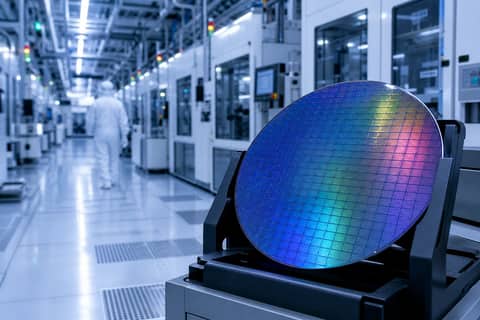
The valuation math tells you what the market is willing to pay for an AI chip alternative. At the indicated opening price, Cerebras would trade near 110 times its $510 million in trailing revenue. That is expensive by any standard. But Cerebras is profitable, with $238 million in net income, which separates it from most AI hardware IPOs this cycle.
Two risks stand out. First, customer concentration: two Middle Eastern clients accounted for about 86% of 2025 revenue. Second, whether the wafer-scale chip architecture can win workloads outside its current niche. Neither risk stopped investors from bidding shares to nearly double the IPO price on Day 1.
For the broader AI trade, Cerebras matters as a sentiment gauge. When the market prices a new entrant this aggressively, risk appetite in the sector is high.
What Connects All Three
These are not three versions of the same story. Each tests a different part of the AI investment chain.
Cisco confirms that enterprise AI budgets are still expanding. Nvidia's new high says the market believes chip demand will hold through geopolitical headwinds. Cerebras shows that investors are willing to pay premium multiples for any credible hardware competitor.
Yesterday, VonTrend covered the tension between SoftBank's $45 billion in real AI gains and Michael Burry's 1999 bubble thesis. Wednesday's session added concrete data to the bull side of that ledger. Cisco's 35% order growth is not a forecast. It is purchase orders signed by enterprise buyers.
What to Watch Next
Applied Materials reported after the close Wednesday. Consensus expected $7.69 billion in revenue and $2.68 in adjusted earnings per share. Cisco validated AI demand in networking. If Applied Materials confirms it in semiconductor equipment, the infrastructure thesis covers the full stack. We will cover the results tomorrow.
Cerebras Day 2 trading on Thursday will show whether the first-day pop sticks or fades. And the Trump-Xi summit enters Day 2, where any movement on the H200 chip block could shift the Nvidia outlook before next week's earnings.
Three signals. Three layers. The AI trade just got its strongest single-session validation of 2026.