The Hikes Landed Thursday Morning
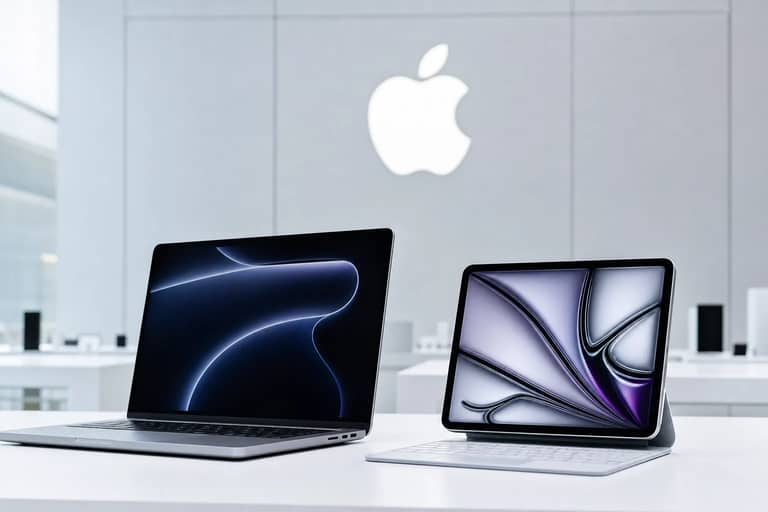
Apple raised starting prices across its Mac and iPad lineups Thursday. Macs went up 15% to 20%. iPads climbed 15% to 25%. The iPhone, which still drives half the company, was left alone.
The increases are real money. The MacBook Pro with 1TB of storage jumped $300 to $1,999. The iPad Pro with Wi-Fi and 256GB rose $200 to $1,199. Even the entry models moved: the MacBook Neo added $100 to $699, and the iPad Air with 128GB went up $150 to $749.
Apple did not dress it up. The company said it had "reached a point where we need to begin raising prices on a number of products," and left the door open to more increases later.
This Is the Other Side of the Memory Boom
The reason is a chip shortage, but not the kind that empties shelves. Memory and storage chips have gotten expensive because AI data centers are buying every one they can get.
Micron, the memory maker, posted record results and a company-record gross margin near 85% this week. Every dollar of that strength is a dollar of cost for the companies that buy memory by the ton.
Apple is one of the biggest buyers. A MacBook or iPad Pro can carry a large block of high-speed memory and storage, and those parts now cost far more than they did a year ago. CEO Tim Cook warned a week ago that price increases were "unavoidable." Thursday he made good on it.
So the AI build-out that turned Micron into a winner just produced its first big consumer casualty. The supply chain that prints record margins for the chipmaker shows up, eventually, on the price tag of a laptop.
Why the Stock Fell More Than the Math Says
Here is the part that does not add up at first glance. Apple is down about 6% on the day, trading near $275 and shedding roughly $18 a share. That is more than $250 billion of market value gone from a $4 trillion company.
The direct hit is small. Mac and iPad together brought in about $62 billion last fiscal year, close to 15% of Apple's $416 billion in sales. The iPhone, at nearly $210 billion, did not get a price change. Services, another $109 billion, sells at high margin and is untouched. A price increase on 15% of the business does not explain a 6% drop.
The market is not pricing the math. It is pricing the signal.
For years Apple's story rested on pricing power. It could hold or raise prices and customers paid, which protected the fat gross margins that justify a premium stock. Thursday tested that story. Raising prices to cover a cost Apple cannot control is a different move than raising them because customers will pay more. It risks cooling demand right when the memory bill is climbing. JPMorgan called the reaction overdone and said the market "overly amplified" the cost impact. The selloff says investors are not yet convinced.
Apple Is Not the Only One Paying
The squeeze runs wider than one company. Dell is down more than 5% Thursday, a $273 billion maker of laptops and memory-heavy servers facing the same input shock. HP is roughly flat. The split tells you something: the more memory a product packs, the more exposed the maker.
Apple has one extra wrinkle. It spends far less on AI infrastructure than Microsoft, Google, or Amazon. That kept its costs low while rivals poured cash into data centers. Now the same boom it sat out is raising its bill from the other direction. Apple is not building the AI economy. It is buying parts inside it, at the new price.
The Margin Question
Apple trades around 33 times earnings and roughly 25 times enterprise value to EBITDA, a premium the market grants for steady margins and a return on equity above 140%. That multiple assumes margins stay rich.
Memory costs threaten that assumption two ways. Apple either absorbs the higher cost and watches gross margin slip, or it passes the cost to customers and risks selling fewer units. Thursday it chose to pass it on. The next earnings report will show which lever moved, and by how much.
What to Watch From Here
The number that matters next is gross margin guidance on Apple's coming earnings call. A steady margin would suggest the hikes are sticking without denting demand. A softer one would confirm the cost shock is real.
Watch the iPhone, too. Apple left it untouched this round. If memory prices keep climbing into the fall product cycle, the question is whether the company can keep its biggest product off the list. And watch unit demand. Higher prices into a tariff-sensitive, value-conscious consumer is the kind of test Apple has not faced in years.
The AI memory crunch was a supply story for months. Thursday it became a demand story too.