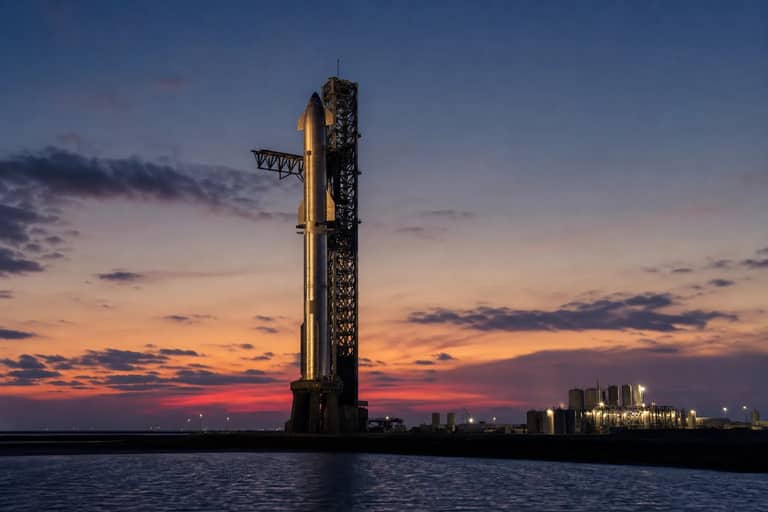
SpaceX set another record low this morning, trading down to around $132.50, below Wednesday's $132.75 and about 2% under its $135 IPO price. Tonight at 6:45 PM EDT, Starship Flight 13 launches from Starbase, Texas.
That combination makes tonight the stock's first hard catalyst since it joined the Nasdaq-100, and the timing could not be tighter. A company that listed in June at the largest IPO ever, and traded as high as $225.64 four days later, is now down more than 40% from that peak at a $1.73 trillion market cap.
What Flight 13 Actually Tests
This is the first Starship flight since a two-month pause. The FAA closed its review of the Flight 12 mishap on July 13 and accepted SpaceX's findings, clearing the way for tonight's 90-minute launch window.
The payload is the reason investors care. Starship will attempt the first deployment of 20 Starlink V3 satellites, the higher-capacity generation that carries Starlink's next revenue leg. This is a deployment test on a suborbital track, so the satellites are expected to burn up on reentry rather than join the constellation. Six of them carry cameras to film Starship's heat shield during the flight. The booster will attempt a landing burn, with the ship targeting an Indian Ocean splashdown.
A clean flight proves the machine that launches the V3 network works. Starlink sits at the center of SpaceX's revenue story, and V3 capacity is what the growth case rests on.
Who Is Buying the Dip
ARK Invest bought 122,807 SpaceX shares across four of its ETFs on Wednesday, roughly $16.6 million at the close, including its flagship ARK Innovation ETF and its space fund ARKX. Reports put ARK's SpaceX purchases at more than $50 million over the past week, all of it into the decline.
The index bid is also structural now. Since joining the Nasdaq-100, SpaceX sits in every fund that tracks it, so passive flows accumulate shares regardless of headlines.
The August 6 Cliff
Whatever happens tonight, the bigger date is three weeks out. SpaceX reports its first earnings as a public company on August 6, and the first insider lockup tranche, roughly 20% of insider shares, releases around the same report under the schedule laid out in its IPO filings.
One detail in that schedule matters more at $132 than it did at $225. The filings allow an early conditional release if the stock trades at least 30% above the $135 IPO price for five of ten straight days. Below the IPO price, that trigger is dead. The supply arrives on the calendar's terms, into whatever price tonight's flight leaves behind.
What Tonight Decides
A successful flight gives the stock its first operational proof point since listing: the V3 deployment mechanism works, the pause is over, and the cadence toward a full constellation resumes. A failure stacks a grounded-rocket narrative on top of a broken IPO price, three weeks before earnings and fresh insider supply land together.
Either way, tonight ends the quiet stretch. For a stock that has done nothing but drift lower since June, that alone changes the trade.