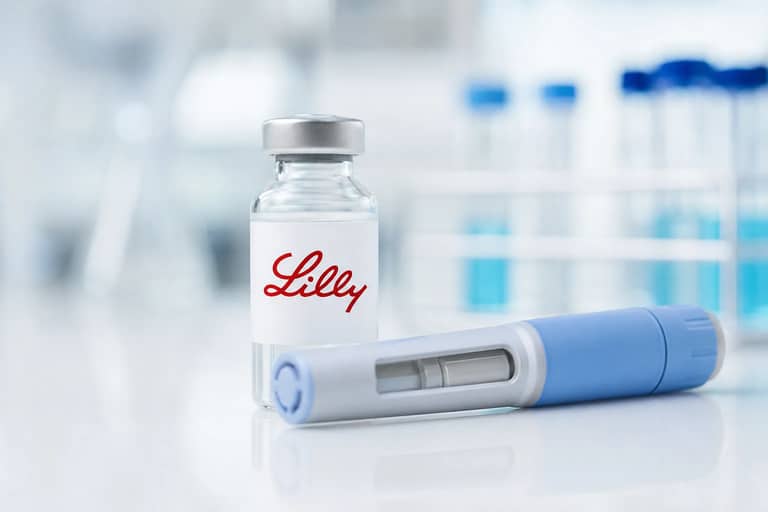
The best healthcare stocks are Eli Lilly (LLY), Johnson & Johnson (JNJ), AbbVie (ABBV), UnitedHealth Group (UNH), Thermo Fisher Scientific (TMO), Abbott Laboratories (ABT), and Intuitive Surgical (ISRG).
Together, these seven companies carry roughly $3 trillion in market value. They cover obesity drugs, cancer and immune medicines, health insurance, lab tools, diabetes devices, and robotic surgery. That mix matters because healthcare is not moving as one group.
This list favors large U.S.-listed businesses with strong cash generation, durable demand, and a clear path to growth. It also includes one turnaround candidate, UnitedHealth, where the upside depends on tighter cost control.
How We Picked These Stocks
The screen started with large U.S.-listed healthcare companies that have established businesses, recent financial results, and market values above roughly $100 billion. Each pick needed a durable edge, such as a leading drug franchise, installed medical-device base, broad distribution network, or recurring service revenue. The list spreads exposure across drugs, insurance, life-science tools, and medical devices. It excludes single-drug biotech firms, smaller speculative names, and companies whose investment case rests mainly on a near-term clinical trial result.
The Best Healthcare Stocks
Eli Lilly (NYSE: LLY)
Why it made the list: Lilly is the clearest large-cap growth story in healthcare. First-quarter revenue rose 56% to $19.8 billion, and management raised its 2026 revenue outlook to $82 billion to $85 billion. Its obesity and diabetes medicines provide the main engine, while Alzheimer’s, cancer, and immune disease add future options.
The bull case: Demand for obesity treatment keeps expanding while Lilly adds manufacturing capacity and builds a broader set of treatments around its core metabolic franchise.
The risk: The biggest risk is that price pressure, supply growth, or competing obesity drugs lower revenue per patient faster than new patient demand rises.
Key number: Q1 revenue growth: 56%
Johnson & Johnson (NYSE: JNJ)
Why it made the list: Johnson & Johnson offers a rare blend of drug growth, medical-device exposure, and shareholder income. Second-quarter sales rose 6.6% to $25.3 billion, and management raised its full-year sales outlook to $101.1 billion. The company also declared a quarterly dividend of $1.34 per share.
The bull case: New cancer and immune medicines, plus procedure growth in MedTech, can support steady gains without relying on one product.
The risk: Patent losses and drug pricing pressure could slow the Innovative Medicine business if new launches do not replace older products on time.
Key number: 2026 sales outlook: $101.1 billion
AbbVie (NYSE: ABBV)
Why it made the list: AbbVie has moved beyond its old Humira dependence faster than many investors expected. First-quarter revenue rose 12.4% to $15.0 billion, while Skyrizi and Rinvoq produced a combined $6.6 billion in sales. Its immunology portfolio grew 16.4% even as Humira sales continued to fall.
The bull case: Skyrizi, Rinvoq, neuroscience products, and aesthetics can replace the earnings lost to Humira competition and extend growth into new treatment areas.
The risk: The central test is whether the newer drug portfolio can keep growing quickly enough to offset Humira erosion and future patent expirations.
Key number: Skyrizi Q1 sales: $4.5 billion
UnitedHealth Group (NYSE: UNH)
Why it made the list: UnitedHealth is the list’s turnaround pick. Second-quarter revenue reached $112.0 billion, operating earnings were $8.0 billion, and operating cash flow was $11.1 billion. Management raised its 2026 adjusted earnings outlook to $19.50 to $20.00 per share.
The bull case: Better pricing, cost controls, and a recovery in Optum’s care and pharmacy businesses could restore earnings growth from a depressed base.
The risk: Medical costs, Medicare policy changes, compliance reviews, and execution issues at Optum remain the biggest threats to a clean recovery.
Key number: Q2 operating cash flow: $11.1 billion
Thermo Fisher Scientific (NYSE: TMO)
Why it made the list: Thermo Fisher sells the tools, supplies, and services that drug companies and research labs need to operate. Second-quarter revenue rose 10% to $12.0 billion, including 5% organic growth, which measures growth excluding deals and currency moves. Adjusted earnings per share rose 13% to $6.03.
The bull case: A recovery in biotech funding and drug research spending would lift demand for lab instruments, consumables, and outsourced drug-development services.
The risk: Research budgets are cyclical. A renewed slowdown in biotech funding or pharmaceutical capital spending would pressure the company’s organic growth.
Key number: Q2 organic revenue growth: 5%
Abbott Laboratories (NYSE: ABT)
Why it made the list: Abbott brings broad exposure to diabetes monitoring, heart devices, diagnostics, and nutrition. Second-quarter sales reached $12.6 billion, while comparable sales grew 4.8%. Management reaffirmed 2026 comparable sales growth guidance of 6.5% to 7.5% and raised adjusted earnings guidance.
The bull case: Libre glucose monitors, heart devices, and newer diagnostic products can produce steady growth across several healthcare markets.
The risk: Slower growth in diabetes devices or more intense pricing competition could weaken the company’s most important growth driver.
Key number: 2026 comparable sales growth outlook: 6.5% to 7.5%
Intuitive Surgical (Nasdaq: ISRG)
Why it made the list: Intuitive Surgical has built one of healthcare’s strongest installed-base businesses through its da Vinci surgical robots. Worldwide da Vinci and Ion procedures grew about 16% in the second quarter, while the da Vinci installed base reached 11,710 systems. Procedure growth drives recurring sales of instruments, accessories, and service contracts.
The bull case: More hospitals adopting da Vinci 5 systems and more surgeons using robotics in new procedures can compound recurring revenue for years.
The risk: The stock depends on sustained procedure growth. Hospital budget cuts, slower system placements, or stronger competition would challenge its premium valuation.
Key number: Installed da Vinci systems: 11,710
Healthcare Sector Overview
Healthcare is being driven by two very different forces. The first is innovation. Obesity drugs, cancer treatments, surgical robotics, continuous glucose monitoring, and newer heart devices are expanding the pool of patients who can be treated. That supports growth at Lilly, AbbVie, Abbott, and Intuitive Surgical.
The second force is cost pressure. Insurers and government programs face higher medical use, tougher pricing rules, and close scrutiny of billing and care-management practices. That creates risk for UnitedHealth, even as it offers a large cash-generating platform.
Life-science tools sit between those trends. Thermo Fisher benefits when drugmakers and biotech firms increase research, manufacturing, and testing activity. Johnson & Johnson provides the broadest balance, with both medicines and devices. The strongest healthcare holdings now pair a clear growth engine with recurring demand, rather than relying only on the sector’s traditional defensive label.
What to Watch
- AbbVie reports second-quarter results on July 31, with Skyrizi, Rinvoq, and Humira trends as the key scorecard.
- Lilly reports second-quarter results on August 5, with obesity-drug volume, supply capacity, and 2026 guidance in focus.
- FDA decisions later in 2026 on AbbVie applications for Skyrizi in Crohn’s disease and Rinvoq in severe alopecia areata.
The Bottom Line
This list fits investors who want healthcare exposure across several business models instead of one narrow drug bet. Lilly offers the strongest growth, Johnson & Johnson adds balance, and UnitedHealth offers the most recovery potential. Compare each company’s growth source, valuation, and main risk before building a position.
Frequently Asked Questions
What are the best healthcare stocks right now?
The strongest broad list includes Eli Lilly, Johnson & Johnson, AbbVie, UnitedHealth Group, Thermo Fisher Scientific, Abbott Laboratories, and Intuitive Surgical. They provide exposure to medicines, insurance, lab tools, medical devices, and robotic surgery.
Is Eli Lilly still a good healthcare growth stock?
Lilly remains a leading healthcare growth company because first-quarter 2026 revenue rose 56% to $19.8 billion and management raised its full-year revenue outlook to $82 billion to $85 billion. The main issue is whether obesity-drug demand and pricing can support expectations already built into the stock.
Which healthcare stock gives the best exposure to medical devices?
Intuitive Surgical offers focused exposure to robotic surgery, while Abbott offers broader exposure to diabetes monitoring, heart devices, diagnostics, and nutrition. Intuitive has faster procedure-driven growth, while Abbott is more diversified.
Which healthcare stock is best for income investors?
Johnson & Johnson is the clearest income-oriented choice on this list because it combines a quarterly dividend with large medicine and medical-device businesses. AbbVie and UnitedHealth also return cash to shareholders, but each carries more company-specific risk.
Are healthcare stocks defensive investments?
Healthcare demand is often resilient, but healthcare stocks are not all defensive. Insurers can be hurt by rising medical costs, drugmakers face patent and pricing risk, and device companies depend on hospital budgets and procedure volumes.