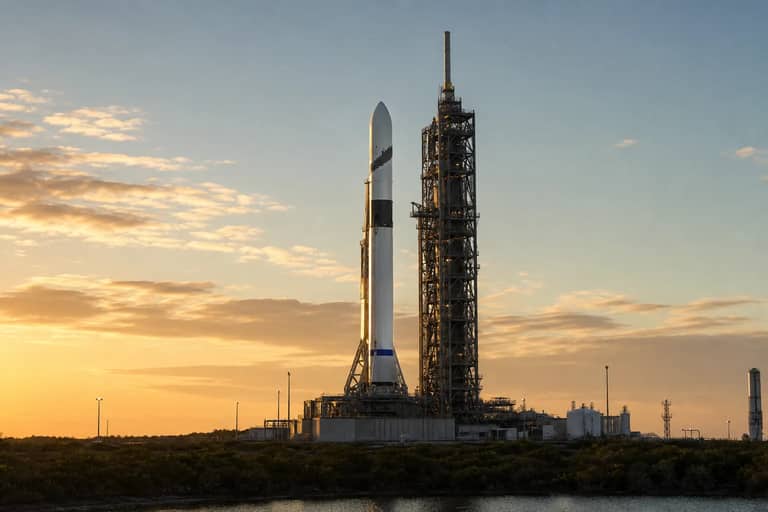
The First Outside Money in 25 Years
Jeff Bezos founded Blue Origin in 2000 and has funded it almost entirely himself, selling Amazon stock year after year to pay the bills. That is reportedly about to change. According to multiple reports, the company is raising roughly $10 billion at a $130 billion pre-money valuation, its first round from outside investors.
The round is said to be led by Coatue, with Bezos participating. The cash would go toward scaling New Glenn, the heavy-lift rocket meant to compete for the same government and commercial launch contracts that drive the industry.
None of this is official yet. Blue Origin has not confirmed the terms, so treat the numbers as reported rather than settled. But the direction is clear: private space money is getting bigger and more institutional.
What $130 Billion Really Says
A $130 billion tag would make Blue Origin one of the most valuable private companies in the world. It also tells you how investors are pricing the launch business now that a credible number two exists behind the leader.
The comparison is impossible to miss. SpaceX went public in June and now carries a market value near $1.9 trillion, though the stock trades close to its post-listing low around $150. Blue Origin at $130 billion is a fraction of that, which is the point. One company dominates the market, and the rest are being valued on the hope of catching up.
For a private-market round, that gap is the story. It sets a floor under the idea that space launch is a real, fundable industry, not a science project. It does nothing to help a retail investor who wants a position today.
What You Can Actually Buy
Blue Origin is private. You cannot buy a share, and the Bezos round does not change that. The public space trade is short and it is volatile.
SpaceX is now the large, liquid way to own launch, but it is richly valued and trades well off its debut price. Rocket Lab is the small-cap alternative, with a market value near $47 billion. It is down today with the rest of risk assets and it is not yet consistently profitable, so it trades on future revenue rather than current earnings. That makes it a high-beta bet that swings hard in both directions.
The steadier way in is through the established defense and aerospace suppliers that build engines, avionics and structures for multiple rocket programs at once. Amazon, where Bezos remains the largest shareholder, also carries indirect exposure through its Project Kuiper satellite network, which depends on cheap launch capacity. None of these is a pure play, and that is exactly the problem with the space trade right now.
Forward Look
Watch whether the Blue Origin round actually closes at the reported terms, and who else joins Coatue. A crowded, oversubscribed round would confirm that big institutions want space exposure they cannot get on the public market. That demand tends to spill over into the handful of names retail can buy, which is why a private funding round is worth the public market's attention.