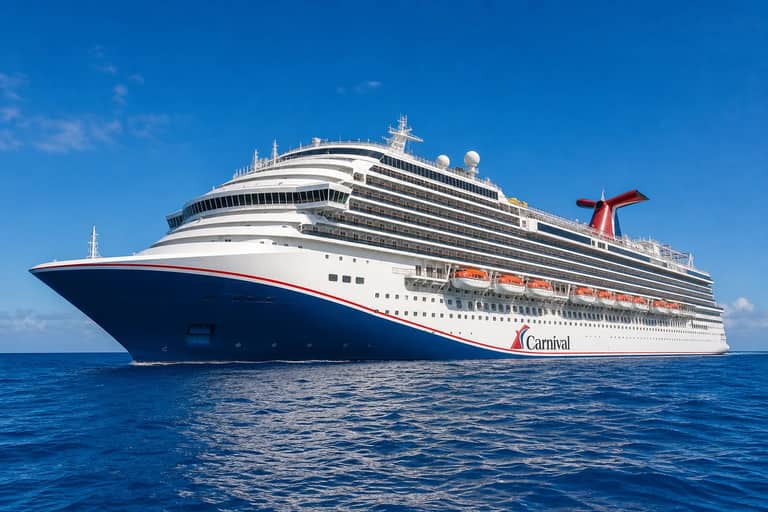
Carnival just had its best second quarter on record, and investors are selling the stock.
The cruise operator reported record revenue of $6.7 billion, up about 6% from a year ago. Adjusted profit came in at $0.41 a share, above the $0.33 analysts expected. Adjusted earnings before interest, taxes, depreciation, and amortization hit a record $1.6 billion. By almost every measure inside the quarter, the business is running hot.
Carnival (CCL) is down about 5% Tuesday, near $28.50. The number moving the stock is not in the quarter. It is in the outlook.
One guidance line did the damage.
Carnival trimmed its full-year net yield growth forecast to about 2.25%, down from the 3.25% it guided in March. Net yield measures revenue earned per available passenger day after costs, and it is the figure cruise investors watch most closely. A cut there signals softer pricing ahead.
The company pointed to the Middle East conflict, which has dented demand for European voyages, along with higher crew-travel and freight costs and some itinerary redeployments. European sailings are a meaningful slice of Carnival's summer, and that is where the softness landed.
The rest of the guidance went the other way. Carnival actually nudged its full-year earnings guidance up a penny to $2.22 a share and now expects full-year adjusted EBITDA above $7 billion. The headline profit picture improved. The pricing trajectory did not, and the market traded the trajectory.
The selling stopped at Carnival's door.
The cleanest read on Tuesday came from the names that did not move.
Royal Caribbean (RCL) is holding near $310 and Norwegian Cruise Line (NCLH) is trading slightly higher around $20 while Carnival falls. When one cruise line drops 5% and its two largest peers stay flat, the problem is company-specific, not a verdict on cruise demand.
That distinction matters for valuation. Royal Caribbean carries an $83 billion market value and trades at a clear premium to Carnival on earnings. Carnival, near $28.50, trades at roughly 13 times its own full-year guidance. The market is paying up for Royal Caribbean's pricing power and discounting Carnival's European exposure.
Demand for the broader category still looks firm. Carnival said about 85% of its 2026 capacity is already booked, which gives it visibility most consumer businesses never have.
The balance sheet kept improving.
The other quiet number was debt.
Net debt fell to 3.1 times adjusted EBITDA at quarter-end, down from 3.3 times in the first quarter and 3.4 times at the end of 2025. Carnival took on a mountain of borrowing to survive the shutdown years, and it is working that load down steadily. The company also bought back more than 17 million shares for over $450 million during the quarter.
That is the tension in one stock. The balance sheet is healing and bookings are full, but the pricing guide slipped and the shares trade on the guide.
Watch the next two booking updates for whether European demand stabilizes once the geopolitical headlines fade, and watch fuel costs, where cheaper oil this summer is a tailwind Carnival has not yet leaned on. The quarter says the ships are full. The outlook says the pricing is the question.