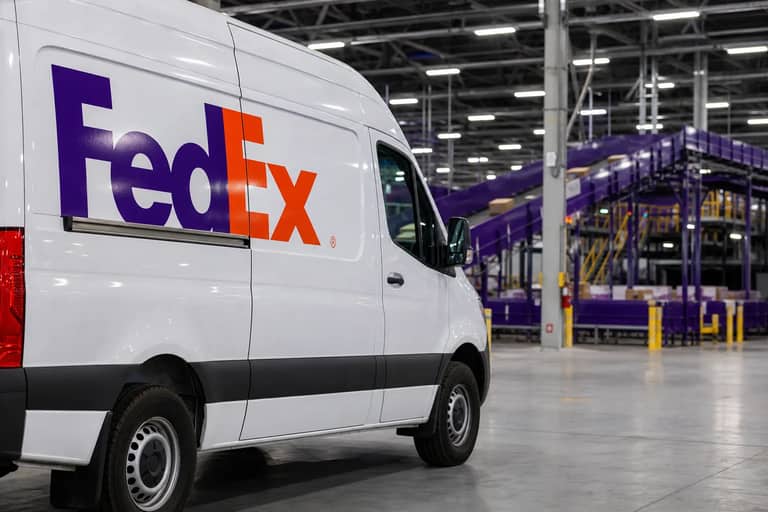
FedEx delivered the quarter it needed and the stock dropped anyway. The company reported adjusted earnings of $6.31 a share after the close on Tuesday, ahead of the $5.92 analysts expected. Revenue hit a record near $25 billion, up about 13% from $22.2 billion a year ago.
It was the first earnings report since FedEx spun off its Freight trucking arm on June 1. For the full fiscal year, revenue reached $94.7 billion, up from $87.9 billion. By every headline measure, the quarter was strong.
The forecast is what moved the stock
Shares fell about 6% in after-hours trading, landing near $298. That came on top of a 3.5% drop during the regular session, when the stock closed at $317.24 inside a broad selloff in tech and transport names.
The reason was guidance. FedEx framed the new fiscal year more cautiously than the market hoped, and a cautious outlook outweighed a clean beat. This was the exact risk worth watching into the print. The cost-cutting story is well known, demand is not improving fast, and a stock that had nearly doubled off its lows priced in a lot of good news.
Margins tell the real story
Revenue grew, but adjusted operating margin slipped to 8.4% from 9.1% a year ago. That is the math of the business FedEx is left with after the spin-off.
The high-margin trucking unit is gone. What remains is the express and ground network, a higher-volume, lower-margin machine where cost control drives profit more than revenue. FedEx said its DRIVE program exceeded its $1 billion savings goal for the year, and management is targeting another $1.4 billion in cuts by the end of the calendar year through Network 2.0. The company needs every dollar of it to defend margins as volumes stay soft.
The spin-off handed FedEx cash and a question
FedEx finished the year with $13.3 billion in cash, helped by a $4.1 billion dividend it collected from the FedEx Freight separation. The new trucking company traded near $166 on Tuesday, up about 3% on a down day for the market.
FedEx kept a 19.9% stake in that business. Selling it down would hand the parent a large pile of cash to return to shareholders or reinvest, and investors still want a timeline. How FedEx uses that stake is a real lever on the capital-return story over the next year.
One tailwind is its rival's retreat
FedEx is leaning into large-package volume from a multi-year Amazon deal at the same time UPS is cutting its own Amazon shipments to chase higher-margin freight. UPS traded near $106 on Tuesday. The split strategy means FedEx is picking up parcels exactly where its biggest competitor is walking away, which supports ground volume even as the broader shipping economy cools.
What to watch from here
The stock now trades near 15 times earnings after the after-hours drop, below its own five-year average. A beat that ends in a 6% decline tells you the market is pricing demand, not the past quarter.
The tone on shipping volumes into peak season is the next tell, and it travels well beyond this one name. FedEx moves freight for manufacturers and retailers worldwide, so its read on industrial activity is a live signal for transports and the wider economy. If management can pair the cost savings with any sign that volumes are stabilizing, the lower price could look like an opening rather than a warning.