The Company Behind the Ticker
Most investors know Constellation Energy as a stock that tripled during the AI boom. Fewer know what it actually does.
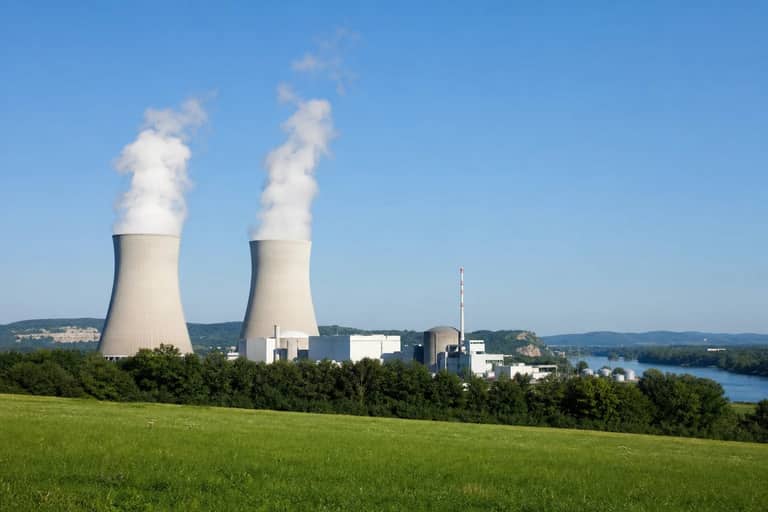
Constellation spun out of Exelon in early 2022 as a standalone power company. It owns and runs power plants, then sells the electricity those plants make. Its crown jewel is nuclear. The company operates 21 reactors across 12 sites, more than 19,000 megawatts of always-on power. That is the largest nuclear fleet in the United States, and it runs at capacity factors above 94%, meaning the reactors produce power nearly all the time.
Nuclear is the whole story here. Coal and gas plants burn fuel that costs money every hour they run. A paid-off nuclear reactor produces power at a very low cost once it is built. When wholesale electricity prices rise, that gap widens, and Constellation keeps the difference as profit.
How the Money Actually Comes In
Constellation makes money two ways.
The first is generation. It sells the power from its plants into wholesale markets. When demand for electricity climbs, prices climb, and a low-cost nuclear fleet captures the difference. The second is retail supply. Constellation is one of the largest sellers of electricity and natural gas to businesses, factories, and homes in the country. That side smooths out earnings when power prices swing.
The scale is real. Full-year 2025 revenue came in at $25.5 billion. Adjusted operating earnings landed at $9.39 per share. For 2026, the company has guided to $11.00 to $12.00 per share and set a target to grow earnings roughly 20% a year over the long run. Utilities do not usually talk like that. Constellation can because of what happened to power demand.
Why AI Changed the Math
For two decades, US electricity demand barely grew. Efficiency gains canceled out population growth. Then came the data center.
A single large AI data center can pull as much power as a small city, and it needs that power around the clock, every day, forever. Solar and wind cannot promise that. Nuclear can. That is why the biggest names in technology started calling Constellation.
In 2024, Microsoft signed a 20-year deal to buy the entire output of a restarted reactor at Three Mile Island, now renamed the Crane Clean Energy Center. The plant is targeted to come back online around 2027 and will deliver about 835 megawatts, enough for a large data center campus. In June 2025, Meta signed its own 20-year agreement to buy roughly 1.1 gigawatts from the Clinton plant in Illinois.
These are not one-year contracts. They lock in a buyer at a set price for two decades. For a power company, that kind of revenue visibility is rare, and it is exactly what investors pay a premium for.
The Calpine Deal Reshaped the Fleet
In January 2026, Constellation closed its largest move yet. It bought Calpine for about $22 billion in stock and cash.
Calpine is the country's biggest operator of natural gas plants and a major player in Texas, the fastest-growing power market in America. The deal made Constellation the largest power producer in the United States, with roughly 55 gigawatts of capacity across nuclear, gas, wind, solar, and hydro. To win antitrust approval, Constellation agreed to sell a block of plants in the Mid-Atlantic to LS Power.
The logic is straightforward. Nuclear provides the steady baseload. Gas provides the flexible power that fills gaps when demand spikes. Owning both, in more regions, gives Constellation more ways to sell into the data-center wave.
What the Stock Is Telling You
The shares have cooled off. Constellation trades near $250, well below the 52-week high above $410 it touched last year. The company carries a market value around $90 billion. At the midpoint of its 2026 guidance, the stock trades at roughly 22 times forward earnings, a premium to most utilities but cheaper than it looked at the peak.
The dividend is small. Constellation is raising it by about 10% a year, but the yield still sits under 1%. This is not an income stock in the way NextEra Energy is built for income. NextEra carries a $183 billion market value, trades near $88, and yields well over 2%. Constellation is a growth story wearing a utility's clothes. Investors who want the same data-center theme with heavier gas and Texas exposure often look at Vistra, a $53 billion rival trading near $159 that has ridden the same demand wave.
The risks are worth naming. Power prices can fall as fast as they rose. Reactor restarts can slip past their target dates. And a valuation built on 20% growth leaves little room for a miss.
The Real Question Ahead
Constellation has done the hard part. It owns the reactors, signed the contracts, and bought the gas fleet. Now it has to deliver.
The next two years turn on three things: whether the Three Mile Island restart hits its 2027 timeline, whether wholesale power prices stay elevated as data centers keep drawing more juice, and whether the Calpine plants earn their keep. If all three break the right way, the growth target holds. If any one slips, a stock priced for perfection has a long way to fall. Either way, the company that once looked like a boring nuclear operator now sits at the center of the most expensive buildout in modern history.