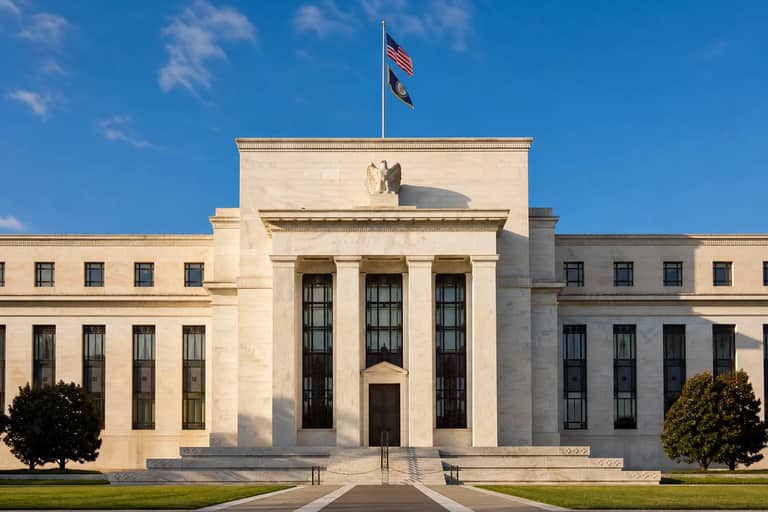
Two things happened before the market opened Tuesday, and they pointed in opposite directions.
The Labor Department said consumer prices rose 3.5% in June from a year earlier, down from 4.2% in May and below the 3.8% economists expected. On a monthly basis it was the biggest drop in prices since 2020. Ninety minutes later, new Federal Reserve Chair Kevin Warsh sat down in front of the House Financial Services Committee and told lawmakers the Fed has "no tolerance for persistently elevated inflation."
One number said the pressure is easing. The Fed chair said he does not believe it yet. That gap is the whole story.
Where the relief came from
The cool print was not broad. It was mostly energy. Gasoline prices fell hard in June after June's short-lived ceasefire reopened shipping through the Strait of Hormuz, and cheaper fuel dragged the headline number down.
Strip energy out and the picture is stickier. Core inflation, which leaves out food and fuel, came in at 2.6% over the past year, below the 2.8% forecast but still above the Fed's 2% target. Core is the number the Fed actually watches, because it reflects the part of inflation that does not swing with a single commodity.
So the June report is real relief, but it is the kind of relief that can reverse in a month. That is exactly why the Fed is not throwing a party.
Why Warsh refused to celebrate
Warsh is running his first testimony as chairman, and he used it to draw a hard line. He pledged a policy "regime change" to rid Americans of what he called the inflation "tax," and he made clear he would not be in the business of bailing anyone out, "including crypto."
He declined to say whether he supports higher interest rates. But a chairman who leads with "no tolerance" is not signaling a rate cut. He is signaling patience at best and a hawkish bias at worst.
There is a second reason for caution. The energy relief that cooled June could unwind fast. The ceasefire that reopened Hormuz has collapsed, and Washington's new 20% toll on cargo through the strait threatens to push fuel costs right back up. One quiet month built on cheap gasoline is not a trend, and the Fed knows it.
Why a good report did not buy a rally
In a normal cycle, an inflation number this soft would send stocks and bonds higher on rate-cut hopes. Tuesday, the major indexes wavered instead of surging. Traders have been burned this way before.
The math is simple. If inflation cools but the Fed holds rates steady, "real" rates, the return after inflation, actually rise. Higher real rates are a headwind for the stocks that need cheap money most, and they take the wind out of the rate-cut trade before it can get going.
That is why the parts of the market that live and die on Fed policy got no lift from a friendly headline.
The corners that needed the cut
Small caps are the clearest example. The Russell 2000 fund (IWM), which holds roughly 2,000 smaller U.S. companies and charges a 0.19% expense ratio, is packed with businesses that carry floating-rate debt. They benefit most when rates fall and suffer most when a cut gets pushed out.
Housing is the other one. Homebuilders in a fund like the SPDR Homebuilders ETF (XHB), which charges 0.35%, depend on mortgage rates that track Fed expectations. A cool inflation print that does not move the Fed does little for a buyer staring at a high mortgage quote.
Long-dated bonds sit in the same trap. A fund like the 20-plus year Treasury ETF (TLT) rallies when the market prices in cuts and sags when it does not. With a hawkish chair setting the tone, it has little reason to rally on one soft print.
What actually works when the Fed sits still
A Fed that will not cut into cooling inflation rewards a different kind of company. Businesses that throw off cash now, carry little debt, and do not need lower rates to justify their price tend to hold up better than long-duration growth names that are priced on profits years away.
That is the quiet message under Tuesday's noise. The cheap-money era is not coming back on one soft report, and the market is slowly repricing around a central bank that plans to stay tight.
What to Watch From Here
Watch energy first. If the Hormuz toll pushes fuel back up, July's inflation print could erase June's improvement, and the rate-cut case falls apart.
Watch core services next. That is the sticky part of inflation, and it is the number Warsh will point to when he explains why he is in no rush.
And watch the tone at the next Fed meeting. The data gave the Fed room to ease. Warsh spent Tuesday explaining why he might not take it. When the chair and the data disagree, the chair sets the rate.