The consensus this morning is that the energy trade is finished.
Oil is down sharply on reports that the U.S. and Iran could sign a peace framework in Switzerland as soon as Sunday. Futures are pointing higher. Rate-sensitive names are bouncing in premarket.
The rotation looks obvious: sell crude, sell the producers, buy the dip in everything the oil shock punished.
That trade is early.
The deal is not done. And even if it gets done, the supply gap does not close fast.
Start with the framework itself. The 14-point draft reportedly calls for Iran to reopen the Strait within 30 days while the U.S. lifts oil sanctions and begins force withdrawal.
But Iranian state media attached conditions: release of frozen funds, suspension of sanctions, and lifting the naval blockade before formal negotiations even start. That is a negotiating position, not a signed term sheet.
The April ceasefire held for 60 days before collapsing.
Then consider what "reopening" means in practice. Marine insurers do not drop war-risk premiums the day a document is signed. The Cape of Good Hope detour that added roughly $2 to $3 per barrel in shipping costs takes months to unwind even under the best-case timeline.
The number the market is overlooking sits in the reserve data.
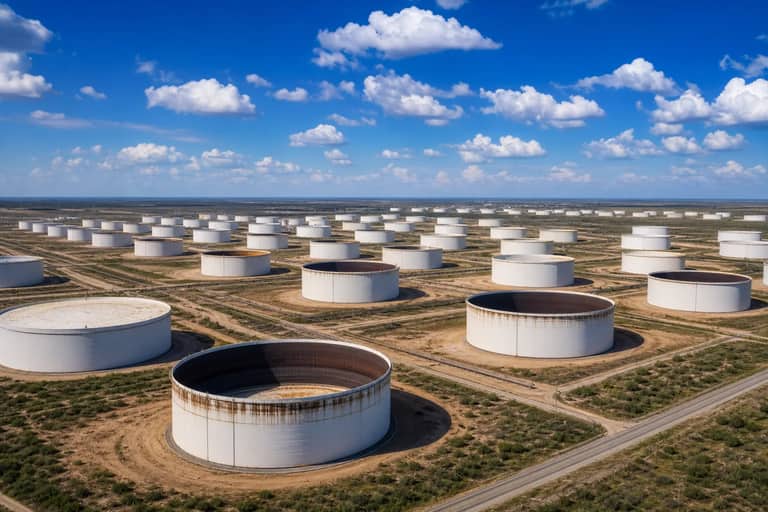
The Strategic Petroleum Reserve has drained to roughly 360 million barrels. The five-week draw of 70 million barrels from total U.S. stockpiles has not been replaced.
WTI around $84 and Brent near $87 this morning price in a best-case diplomatic outcome. They do not price in the months between a signed framework and actual barrels flowing through the Strait.
Gold tells the other side of the story. It is up roughly 2.7% to around $4,220 this morning because a peace deal that eases inflation expectations makes a Fed hike less likely. Lower real rate expectations lift bullion.
But the FOMC does not set policy on frameworks. It sets policy on printed data. And the printed data says 4.2% headline CPI and 1.1% monthly PPI.
For energy positioning, this pullback looks like a window, not an exit.
EOG Resources is down roughly 2.7% this morning to around $137 as the sector sells off. The company operates entirely in U.S. shale with no Middle East exposure, trades near 13 times forward earnings, and pays a dividend yield around 3%. Its cash flows track domestic oil prices, not Strait traffic.
A successful deal that eventually brings Brent toward $80 still leaves EOG profitable and returning capital to shareholders.
Halliburton is holding flat near $40 while the E&P names sell. Oilfield services revenue tracks rig counts and completion volumes, both of which remain elevated regardless of what happens in Switzerland.
HAL has nearly doubled from its 52-week low of $20 and carries a $33 billion market cap. Producers are not cutting drilling programs because of a framework overseas.
SpaceX enters the picture at 9:50 AM.
SpaceX begins trading on the Nasdaq this morning under ticker SPCX after pricing at $135 per share last night. At $1.77 trillion, it debuts as the largest IPO in U.S. history and the seventh-largest company by market cap. We covered what the pricing revealed about institutional demand yesterday.
Prediction markets are betting on a $150 to $200 opening range. The spread between that and the $135 print will be the most watched number at the open.
Yesterday the S&P 500 rose 1.75% to 7,394 and the Nasdaq surged 2.54% to 25,810 as reports of the potential deal emerged. That rally priced the best possible outcome. Any friction in the signing, any missed deadline on Strait reopening, any hawkish surprise from the FOMC next Wednesday, and the energy selloff reverses fast.
The peace trade may eventually prove right. This morning, it is a bet on perfect execution from two governments that have broken every prior agreement within months. The inventory deficit, the depleted reserves, and the Fed calendar argue for staying cautious before rotating out of the sector that has been earning through every headline.