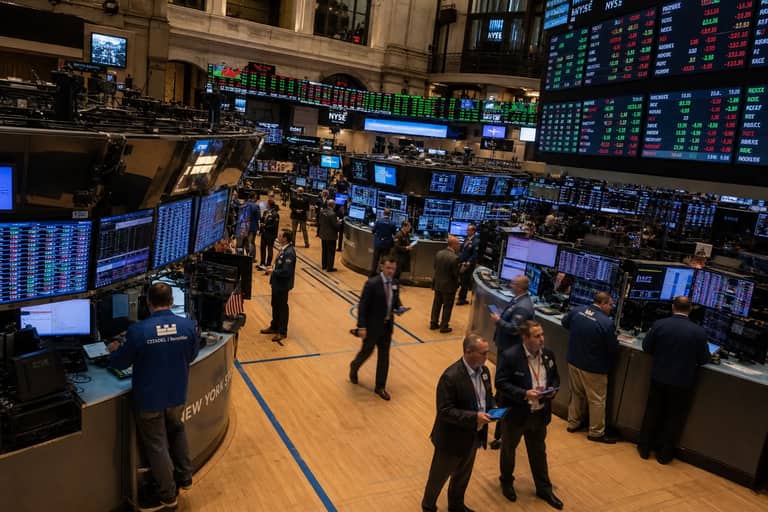
Thursday was a split-screen day. The Dow Jones Industrial Average closed at a record 52,900, up nearly 600 points on the last trading session before the Fourth of July weekend. The Nasdaq fell for a second straight session.
The first full week of the third quarter opened with a question the second quarter never had to answer. The S&P 500 just posted its best quarterly gain since 2020, and the Nasdaq was up double digits for the period. Then the June jobs report landed Thursday morning and rearranged the board.
The economy added 57,000 jobs in June, less than half the 115,000 Wall Street expected. Prior months were revised down by a combined 74,000 jobs that never existed. The unemployment rate ticked down to 4.2%, but the household survey told a rougher story: 507,000 fewer people reported having a job than the month before.
Weak hiring makes the case for more rate hikes much harder. Money moved toward the parts of the market that benefit most when borrowing costs fall: financials, industrials, and utilities. Those sectors are Dow-heavy and Nasdaq-light, which is why one index hit a record and the other gave back ground.
The breadth told the story. Apple gained 4.8% and led the Dow higher. McDonald's added 4%, and Walt Disney rose nearly 4%. Twenty-four of 30 Dow components finished in the green. On the other side, the VanEck Semiconductor ETF fell for a second straight day and the Nasdaq-100 dropped 2%.
The shift was not just about sectors. Stocks with lower valuations and higher dividend yields outperformed across the board. When the economy slows and rate cuts come into view, the playbook is familiar: money leaves the names priced for growth acceleration and moves toward the ones priced for stability.
Earlier this week, Fed Chairman Kevin Warsh said inflation risks have "come down" since the Iran negotiations began easing energy prices. WTI crude fell below $68 Thursday. If energy keeps moving lower, the path to a rate cut shortens, and that favors the rate-sensitive side of the market.
Gold moved with the same logic. Futures settled near $4,079 as real rates fell on the weaker jobs data. Gold has been one of the best-performing assets this year, and the conditions driving it higher got reinforced Thursday.
But the answer to the headline question is not a clean yes. The AI spending cycle is still running, and hyperscaler capital expenditure guides have only gone up this year. What changed is the backdrop: valuations built on a strong economy now face a labor market that is cooling faster than expected, and when the ground shifts, money rotates to cheaper names first.
That does not mean growth is over. It means the bar for holding expensive stocks got higher, and some investors chose to lock in gains before a three-day weekend.
The real test comes mid-July. Goldman Sachs, JPMorgan, and Citigroup all report the week of July 14. If the big banks show that loan growth held up and trading desks had a strong quarter, the rotation has legs beyond one session. If the numbers disappoint, Thursday was just a positioning trade ahead of a long weekend.
Thursday: Dow 52,900 (record). S&P 500 roughly flat. Nasdaq fell for a second session. Gold futures near $4,079. Oil below $68. Bitcoin around $61,000.