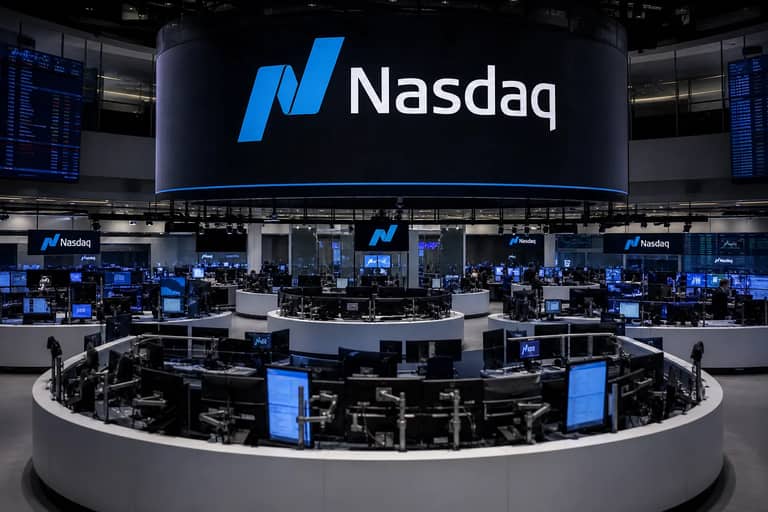
The Nasdaq Composite closed lower for a fifth straight session on Friday. The selling was orderly, not a panic. But the direction was clear: investors kept moving money out of technology and into the safer corners of the market.
The S&P 500 finished at 7,354, down less than a tenth of a percent. The Dow eased 45 points to 51,876. The Nasdaq slipped to 25,298. Beneath those small index moves was a sharp split in what worked and what did not.
The defensive trade took over
Consumer staples and utilities led the day. The Consumer Staples Select Sector SPDR Fund rose while most of the market fell, and the Utilities Select Sector SPDR Fund added ground as well. These are the groups investors buy when they want steady dividends and earnings that hold up no matter what the economy does.
Small caps also held firm. The iShares Russell 2000 ETF closed higher even as the large-cap indexes drifted down. Smaller companies carry less exposure to the AI spending arms race, which is exactly why money found them this week.
Chips and megacaps did the damage
The Technology Select Sector SPDR Fund was the weak spot again, dragged lower by semiconductors and the largest software names. The worry is no longer whether AI demand is real. It is who pays for it, and how much profit gets eaten along the way.
That concern hardened this week after OpenAI reportedly leaned toward pushing its public offering into next year rather than test investor appetite now. Add in price hikes from Apple and Microsoft tied to the memory shortage, and the market spent the week recalculating the cost side of the AI boom.
A rough end to a strong first half
Technology carried the market for most of the first half of 2026. It is ending that stretch on its back foot. A five-day slide does not erase six months of gains, but it shows how fast sentiment can flip when the story shifts from growth to cost.
For investors sitting on tech-heavy portfolios, the week is a useful stress test. The names that lead on the way up tend to fall hardest when the crowd rotates. Defensive sectors and small caps will not match technology in a roaring bull market, but weeks like this one are why they earn a place in a balanced portfolio.
What comes next
The first half of the year closes Tuesday, June 30. Quarter-end and half-year-end often bring rebalancing flows as large funds trim their winners and add to laggards, which could stretch the rotation a few more sessions. Alphabet also replaces Verizon in the Dow Jones Industrial Average before Monday's open, the first time a company built on search and advertising joins the index.
The question heading into next week is simple. Was this a healthy pause that lets the rest of the market catch up, or the start of something deeper in the names that led for six months? The next few sessions, and the first earnings of the summer, will begin to answer it.