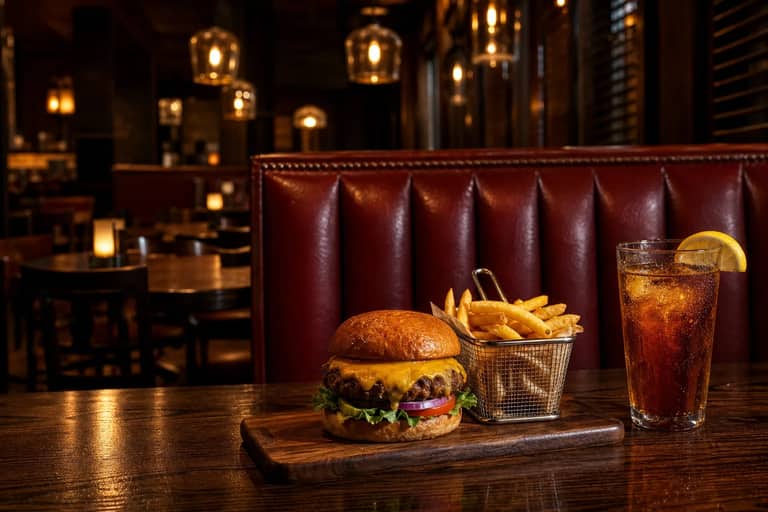
Americans have not stopped eating out. They are doing it less often, and they have become much pickier about where their restaurant money goes.
That shift has split the restaurant business into clear winners and losers. For investors who own restaurant stocks for steady growth or dividends, the gap between chains that are gaining guests and chains that are losing them now matters more than the industry average. The next round of quarterly reports starts on Oct. 13.
- Bureau of Labor Statistics: restaurant prices rose 3.4% in the year through August, compared with 2.2% for groceries.
- National Restaurant Association: August was the 18th month out of the last 19 in which more operators reported fewer customers than more customers.
- Brinker International: Chili's same-store sales have climbed a cumulative 71% over five years, while Wendy's U.S. same-store sales fell 7.0% in the second quarter.
Eating out keeps getting more expensive
Restaurant prices have risen faster than grocery prices for years, and the gap is not closing. In August, the government's index for sit-down meals was up 3.5% from a year earlier. Fast food and other counter-service meals were up 3.2%.
The Agriculture Department expects restaurant prices to rise about 3.5% for all of 2026, versus about 2.4% at the grocery store. It also projects retail beef prices to climb 9.4% this year, a direct hit to burger chains and steakhouses.
Diners have noticed. Foot traffic firm Placer.ai found that restaurant visits trailed year-earlier levels in every month of 2026 through midyear except February. It also found that grocery stores and big-box retailers, with more ready-to-eat meals, are winning a bigger share of the food budget.
McDonald's says this is the new normal
At its investor day on Sept. 23, McDonald's said it expects industry traffic in its biggest markets to stay flat while inflation remains elevated. Chief Executive Chris Kempczinski said the company should stop calling it a difficult environment "and just say that is the environment."
The company's own results show why. U.S. same-store sales rose just 0.8% in the second quarter, down from 2.5% a year earlier, and customer visits declined. On the earnings call, Kempczinski said roughly one-third of the system did not price the new under-$3 value menu the way the company recommended, and many restaurants raised prices instead.
McDonald's now plans to spend up to $8.5 billion through 2036 to help franchisees upgrade their restaurants. At the same time, it is targeting an operating margin in the low-to-mid 50% range by 2030, up from about 46% last year. That is a long-term bet that better food, faster service and lower overhead can win share in a market that is not growing.
The middle of the market is winning
Casual dining chains that offer a sit-down meal at a price close to fast food have been the standouts. Chili's same-store sales rose 5.6% in the quarter ended June 24, with traffic up 1.5% on top of a 23.7% sales jump a year earlier. Its restaurant operating margin improved to 18.6% from 18.2%.
The way Chili's got there matters. The head of its loyalty program told the Let's Talk Loyalty podcast that Chili's ended weekly loyalty freebies in late 2024 once traffic recovered, and it has trimmed its menu from about 120 items to about 70. Fewer giveaways and a simpler kitchen tend to support profits better than constant discounts.
Darden showed the same pattern inside one company. In the quarter ended Aug. 30, same-restaurant sales at LongHorn Steakhouse rose 6.8%, while Olive Garden and Darden's fine dining group each grew about 1%. LongHorn's segment profit rose about 15% to $154.6 million.
Fast casual has held up, too. Chipotle's transactions turned positive again in the second quarter, rising 1.0%, and same-store sales grew 2.2% after falling 4.0% a year earlier. The catch is cost: its restaurant-level margin slipped to 25.2% from 27.4% as beef and labor got more expensive.
Placer.ai's data points the same way. Fast casual traffic beat year-ago levels in every month of 2026 that it measured, and fine dining grew in nearly every month. Years of fast food price hikes have narrowed the gap with sit-down meals, so more diners are choosing a better experience when they do go out.
Fast food is paying for value
The pressure is heaviest at the low-price end, where customers are most stretched. Domino's said it grew orders in both delivery and carryout in the second quarter. Still, its U.S. same-store sales rose only 0.1%, compared with 3.4% a year earlier, a sign that customers are buying but spending carefully.
Wendy's is in a tougher spot. Its U.S. same-store sales fell 7.0% in the second quarter, and its U.S. restaurant count shrank by a net 245 locations in the first half. The company withdrew its 2026 forecast and cut its quarterly dividend to 7 cents a share.
The strain reaches franchisees as well. In September, Meritage Hospitality, which runs 314 Wendy's restaurants, filed for Chapter 11 bankruptcy protection. When franchisees struggle, the parent company's royalty income usually suffers next.
What the chatter is saying
Financial Twitter has been blunt about the squeeze. Macro commentator Jeff Snider, whose Eurodollar University videos are widely shared, summed up the value war this way: "Customers see higher menu prices. Franchisees see shrinking margins. Corporate management sees declining traffic."
On Reddit's fast food and McDonald's forums, a steady stream of threads this year shows customers posting menu screenshots and asking where the value went. Complaints like that often show up in traffic numbers before they show up in profits.
What investors should watch
Domino's reports on Oct. 13, and the September consumer price report follows on Oct. 14. Brinker and Chipotle both report on Oct. 28, and McDonald's is expected to report in the weeks after that.
Look past headline sales. The most useful number in each report is traffic, or guest counts. Sales growth that comes only from price increases can fade fast if customers push back, while chains that add visits without heavy discounts have more room to protect profits.
Watch costs, too. With beef prices still climbing, margins at burger chains and steakhouses could stay under pressure even if sales hold up. Franchisee health is the third test, because closures and bankruptcies cut the royalty income that franchise-heavy companies depend on.
For income investors, Wendy's dividend cut is a reminder that a payout is only as safe as the traffic behind it. Darden, by contrast, declared a quarterly dividend of $1.62 a share and reaffirmed its full-year earnings forecast of $11.10 to $11.35 a share.
The bottom line is that restaurants are no longer one trade. Chains that win visits on value and execution are pulling away from chains that lean on price hikes or deep discounts, and the next few weeks of earnings should make that gap clearer. This article is general information, not personalized financial advice.