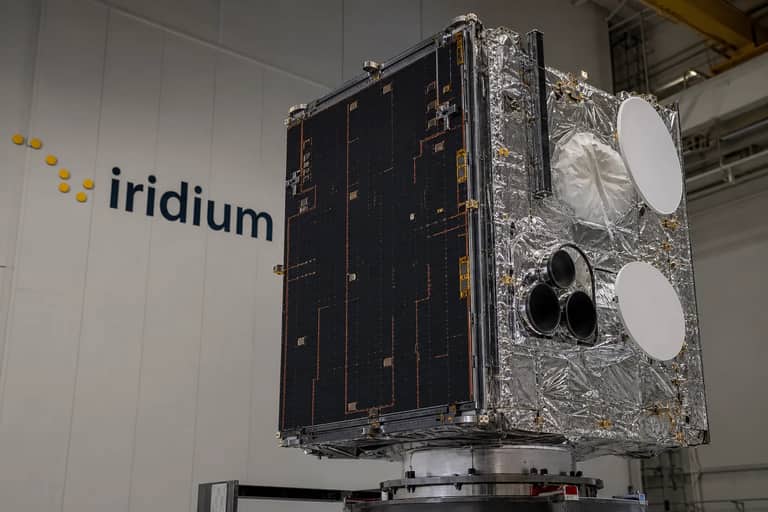
Rocket Lab agreed today to buy Iridium in a cash and stock deal that values the satellite operator at roughly $8 billion including debt. Iridium holders get $54 a share, split between about $27 in cash and Rocket Lab stock, with a collar that protects the stock portion if Rocket Lab shares swing between $67.50 and $112.50. The companies expect to close in mid-2027, pending Iridium shareholder and regulatory approval.
Iridium traded near $53.60 by midday, up about 23% and close to the agreed price. Rocket Lab climbed about 15% to near $97. The market rarely sends both sides of a takeover higher at once. It did here.
Why Iridium said yes.
The $54 price is roughly a 24% premium to where Iridium closed Friday. For a business that was trading in the mid-$40s, that is a clean exit at a full number.
Iridium is the rare small space name that already makes money. It runs a global satellite network, holds valuable radio spectrum, and supplies connectivity to more than 500 partners across phones, ships, planes, and defense. It carries a stock market value near $5.7 billion, trades around 17 times the value of its core profit, and converts a healthy share of revenue into free cash. Owners are handing over a real cash machine, and they are getting paid a premium to do it.
Why Rocket Lab is paying up.
Rocket Lab builds rockets and satellites. Until now it mostly launched and built hardware for other people. Buying Iridium lets it design, build, launch, and operate its own constellation under one roof. That is the same vertically integrated model that made SpaceX, now public after its June debut, the company everyone in the industry measures against.
The cost is steep. Rocket Lab carries a stock market value around $56 billion on less than a billion dollars of revenue, so it trades at one of the richest sales multiples in the market. It does not yet turn a profit and pours more than 40 cents of every revenue dollar into research and development. The Iridium cash flows help that story, but anyone buying Rocket Lab is paying for a future that has to be built, not a business that already prints cash. A deal that stretches to mid-2027 also leaves a long window for financing, regulators, and the stock collar to matter.
The whole sector caught the updraft.
A premium buyout of a profitable operator told investors that satellite assets are worth more than the tape implied. The read-through hit every name with a constellation. AST SpaceMobile jumped about 18%, Viasat rose more than 21%, and Planet Labs gained roughly 15%. None of them got a bid. They moved because one did, and because consolidation tends to come in waves.
That is the trade to watch from here. One deal does not make a sector cheap, and several of these stocks were already up sharply this year before today. The question is whether this is the first move in a round of space consolidation or a one-day pop on a single headline. The answer shows up in the next bid, not this one.