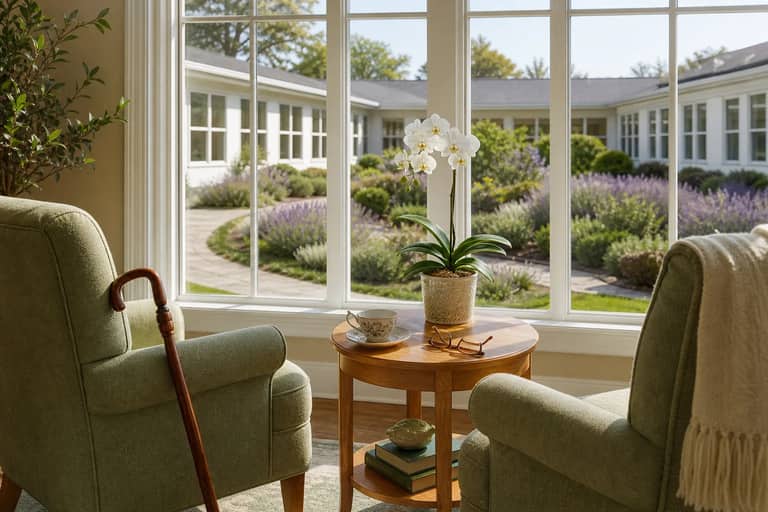
The oldest baby boomers, born in 1946, are turning 80 this year. That is the age when many families start seriously looking at senior housing, and the buildings are already close to full.
Occupancy in senior housing has now risen for 21 straight quarters, and new construction has slowed to a trickle. For investors, that has turned a once-troubled corner of real estate into one of the strongest profit stories in the market. For families, it means fewer open apartments and steadily rising monthly bills. The two biggest landlords in the business report third-quarter results in late October.
- National Investment Center for Seniors Housing & Care: occupancy reached 90.4% in the third quarter, the first time above 90% since before the 2008 financial crisis.
- NIC MAP: inventory grew just 0.4% over the past year, and current building covers only about 10% of what is needed to keep pace with demand.
- Welltower: same-store profit in its senior housing operating portfolio rose 20.5% in the second quarter, and Ventas posted 16%.
The demand wave has arrived
Brookings Institution demographer William Frey projects that the number of Americans aged 80 and older will double from 14.7 million in 2025 to 29.4 million in 2045. That is the age group most likely to need help with daily living.
The data already reflect it. NIC, which tracks the 31 largest U.S. markets through its NIC MAP data service, reported on Oct. 1 that occupancy climbed to 90.4% in the third quarter, up from 89.8% in the spring and about 88.6% a year earlier. Independent living reached 91.7%, assisted living 89.1% and active adult communities 93.2%.
Sixteen of those 31 markets are now above 90%. Boston leads at 94.0%, and NIC says operators there are using waitlists, with some older adults waiting years for the community they want. The softest markets, Houston, Atlanta and Miami, still sit above 86%.
Almost nobody is building
The supply side is the other half of the story. New projects slowed sharply after the pandemic as borrowing and building costs rose, and they have not come back. NIC counts about 16,159 units in development, and total inventory grew only 0.4% in the past year, close to a record low.
NIC MAP estimates that holding national occupancy at 90% as the population ages would take more than 100,000 new units in most years through the late 2030s. The current pace of development is about 10,445 units a year.
That imbalance gives owners pricing power. NIC MAP data show rents rising about 4.6% a year, faster than overall consumer prices.
The landlords are cashing in
The biggest beneficiaries are the real estate investment trusts that own senior housing and share in its operating profits. Welltower, the largest, reported that occupancy in its same-store senior housing portfolio rose to 89.4% in the second quarter from 86.1% a year earlier. Revenue per occupied room grew 5.2%, and the profit margin on those buildings widened to 32.1% from 29.1%.
The result was 20.5% growth in same-store net operating income, a measure of property-level profit. Welltower expects 18.5% to 21.5% growth in that portfolio for the full year, raised its quarterly dividend 15% to 85 cents a share, and said it has closed or agreed to about $15.5 billion of investments so far this year.
Ventas told a similar story. Same-store cash profit in its senior housing operating portfolio grew 16%, led by 18% in the U.S., where average occupancy jumped 3.6 percentage points. On its earnings call, management said communities that are already 90% full delivered about 25% profit growth, because each additional resident adds revenue without adding much cost. Chief Executive Debra Cafaro said demand is "strong and getting stronger as the baby boomers begin turning 80 this year," while new supply "remains at historic lows." Ventas raised its 2026 investment target to $4.5 billion from $3 billion.
Operators are improving, too, though from a lower base. Brookdale Senior Living, one of the largest U.S. operators, said weighted average occupancy rose to 82.4% in the second quarter, up 2.3 percentage points from a year earlier, and reached 83.2% in August.
What families are paying
The same tight market shows up on the other side of the contract. The CareScout Cost of Care Survey, run by a unit of Genworth Financial, put the national median for assisted living at $6,200 a month in 2025, or $74,400 a year, up 5% after a double-digit jump the year before. A semi-private nursing home room runs a median of $315 a day, close to $115,000 a year.
Some increases are much steeper. Connecticut's long-term care ombudsman, Mairead Painter, told Connecticut Public that she expects rents to rise 3% to 6% a year, but some assisted living providers have raised them about 30%, sometimes more than once in a year. A new state law that took effect Oct. 1 requires a public hearing before any fee increase of 10% or more.
On Reddit's aging parents forum, adult children regularly post about double-digit rent increases arriving within a year of move-in and ask how to plan for the next one. The common advice: ask for the community's history of rent increases, get the fee schedule in writing, and learn how care reassessments can raise the bill.
What the chatter is saying
Wall Street analysts have leaned in. Morgan Stanley analyst Ronald Kamdem wrote in a September note that 90% occupancy is where "senior housing can move from a recovery trade to a pricing and operating leverage story," and he sees occupancy heading to 95% or higher. On the Nareit REIT Report podcast, Raymond James analyst Dave Rodgers said, "we don't think it's a stretch to think that maybe this business can grow at 10% annually" over the next decade.
On financial Twitter, REIT researcher David Auerbach of Hoya Capital has amplified both calls in his Daily REIT Beat posts, including the risks Rodgers flagged: government policy on Medicaid funding, labor shortages and the cost of capital.
What investors should watch
Welltower reports after the market closes on Oct. 26, with a call the next morning. Ventas follows after the close on Oct. 27, with its call on Oct. 28. The key numbers are occupancy gains, revenue per occupied room and expense growth. If rents keep rising near 5% while labor costs grow more slowly, margins can keep expanding.
Watch supply, too. NIC says planning activity is picking up, and its data service notes that buying existing buildings is starting to cost more than building new ones. That is usually how building cycles restart, though new projects take years to open.
Price matters for income investors. These are growth stocks now, not high-yield ones. Welltower's dividend yield is below 2%, and at the end of June its shares traded at more than 30 times the midpoint of its full-year funds from operations forecast. Strong fundamentals are largely priced in, so any slowdown in occupancy gains could weigh on the shares.
The bottom line is that senior housing has moved from a recovery story to a scarcity story. Demand is growing every year while new supply stays thin, and that combination favors owners and pressures family budgets. This article is general information, not personalized financial advice.