A two-year-old AI startup most investors have never heard of just agreed to send SpaceX up to $6.3 billion.
Reflection AI, an open-source lab founded by two former Google DeepMind researchers, signed a deal to rent computing power from SpaceX starting July 1. The terms run about $150 million a month and stretch to 2029. Either side can walk after three months with 90 days' notice.
It is the third large compute contract SpaceX has signed in two months. Together they total more than $80 billion. The company that lands rockets on barges has become a data center landlord, and the market spent Tuesday repricing what that is worth.
SpaceX (SPCX) is up more than 4% in midday trading, near $161, clawing back ground after a brutal three-session slide that briefly pushed the stock to $147. That is roughly where it finished its first day as a public company. The round trip has erased the entire post-IPO run that once carried it above $225.
How a rocket company ended up renting out computers
The compute did not come from rockets. It came from xAI.
SpaceX absorbed Elon Musk's artificial intelligence company in a merger that closed February 2. xAI became a wholly owned subsidiary, and the combined entity carried a valuation around $1.25 trillion. With xAI came Colossus, the supercomputer complex Musk built to train the Grok models.
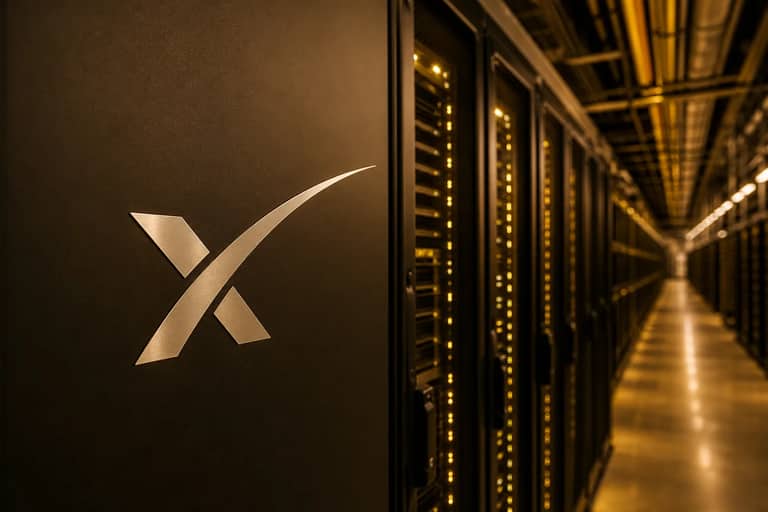
One of those sites is a 785,000-square-foot facility outside Memphis that a SpaceX subsidiary bought for $185 million. It was built to train one company's AI. SpaceX is now renting most of it to other companies instead.
The three tenants and the math behind them
Anthropic was first. In May it agreed to lease all the compute at the original Colossus 1 site near Memphis, more than 220,000 Nvidia GPUs, for a reported $1.25 billion a month through 2029. That contract alone is worth roughly $45 billion.
Google followed in early June. It agreed to pay $920 million a month for access to about 110,000 GPUs at the newer Colossus 2 site, a commitment worth roughly $30 billion through mid-2029.
Reflection is the newest and smallest at up to $6.3 billion. Three tenants, one landlord, and a combined book of contracted revenue north of $80 billion before the buildings are even finished.
This is the answer to the cash-burn fear
The bull case matters because the bear case has dominated for a week.
SpaceX launched its first bond sale Monday, a $20 billion investment-grade offering, its debut in the debt market. The stated purpose is funding the AI buildout and repaying bridge loans tied to the xAI takeover. Investors read a company that burns cash and keeps reaching for more of it, and they sold. The AI operation lost billions last year, according to the company's filings.
The same filing that spooked the market also disclosed something else. SpaceX held about $100.8 billion in cash as of June 19. The bond is not a rescue. It is borrowing stacked on top of one of the largest cash positions of any newly public company on record, against a contracted revenue stream that did not exist six months ago.
The valuation is the reason this matters. SpaceX carries a market value near $2.1 trillion and went public this month at more than 100 times sales. A price that steep already assumes the rocket and satellite businesses keep compounding for years. The compute book is roughly $80 billion in revenue the market was barely crediting when it set that number.
All three major ratings agencies handed SpaceX investment-grade marks ahead of the deal: Baa1 from Moody's, BBB+ from Fitch, BBB from S&P. Rating agencies do not bless companies they expect to run out of money.
Every one of these deals is a Nvidia order
There is a cleaner way to play the buildout than the rocket stock.
Colossus runs on Nvidia silicon. The Anthropic lease covers 220,000 of its GPUs. The Google deal names roughly 110,000 more. Reflection's contract specifies Nvidia's newest GB300 chips. Nvidia (NVDA) sells the shovels to every tenant and to the landlord at the same time.
NVDA carries a market value near $4.9 trillion and is down about 3% Tuesday inside a broad semiconductor selloff. The stock's swings now track the pace of AI data center construction more than its own earnings calendar. Contracts like these are the demand signal underneath the volatility.
The Google deal carries a second tell. Alphabet (GOOGL), a $4.2 trillion company with its own sprawling cloud, is paying nearly a billion dollars a month to rent compute from a rival. That happens only when a company cannot build capacity fast enough to meet its own demand. The shortage is the story, and SpaceX is one of the few sellers with capacity to lease.
What to watch from here
The compute book reframes the dilution debate. SpaceX is funding an AI buildout, but it now has signed tenants helping pay for it, which most pre-revenue AI spenders do not.
Watch whether a fourth tenant signs and whether the existing contracts hold their full term. The Reflection deal can be canceled after three months, and a contract that can be walked is worth less than one that cannot. Watch the bond pricing too. Strong demand for $20 billion in SpaceX paper would tell you the credit market sees the same revenue stream the equity market just remembered.
The rocket business made SpaceX famous. The landlord business may be what the stock trades on next.