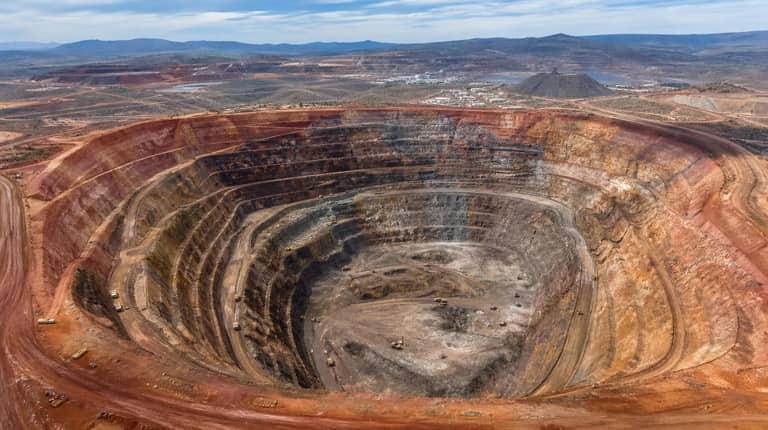
Copper trades near $6.10 per pound, up sharply from a year ago. The International Copper Study Group projects a 150,000 metric ton supply deficit this year, and J.P. Morgan estimates that data center construction alone will consume 475,000 metric tons of copper annually. Electric vehicles use three to four times more copper than combustion engines. Grid upgrades, defense electronics, and renewable energy installations are adding to the demand stack.
The seven stocks below range from the world's largest diversified miners to mid-cap producers with mine-level growth catalysts. Each trades on a major U.S. exchange, produces meaningful copper volumes, and carries a market cap above $2.5 billion.
How We Picked These Stocks
We screened for companies where copper is a primary revenue driver, not a side product. Every pick meets three criteria: a market cap above $1 billion, production growth or mine life extensions in the pipeline, and a listing on the NYSE for U.S. investor access. We then ranked by a combination of operating margins, reserve depth, and near-term catalysts. Diversified miners like BHP and Rio Tinto made the list because their copper segments are large enough to move the stock on their own.
The List
1. Freeport-McMoRan (FCX)
Why it's here: Freeport is the largest publicly traded copper producer in the world. Its Grasberg complex in Indonesia is the single biggest copper and gold mine on Earth, and the company operates additional mines across Arizona, New Mexico, Peru, and Chile.
Bull case: Q1 2026 revenue hit $6.23 billion with $881 million in net income. Freeport sold 657 million pounds of copper at an average realized price of $5.78 per pound. The company signed a memorandum of understanding with the Indonesian government in February 2026 to extend Grasberg operating rights beyond 2041, locking in decades of additional production.
Key risk: Wet ore in the Grasberg Block Cave is a real problem. After a mud rush incident in September 2025, 45% of draw points are now classified as wet (up from 30%), and installation of specialized chute regulators is ongoing. Freeport now targets a full Grasberg restart in 2028, pushed back from 2027, extending the supply loss from one of the world's largest copper operations. Management cut the five-year copper production forecast by approximately 9%.
Key number: $6.23 billion in Q1 2026 revenue, a company record driven by near-record copper prices.
2. Southern Copper (SCCO)
Why it's here: Southern Copper has the highest operating margins in the copper mining industry. Its integrated operations in Peru and Mexico include open-pit mines, smelters, and refineries, giving it cost control from pit to cathode.
Bull case: Full-year 2025 net sales hit a record $13.4 billion, up 17% year over year. EBITDA reached $7.8 billion at a 58% margin. Q1 2026 was even stronger: net income rose 67% to $1.58 billion with a 37% profit margin. The company holds massive copper reserves across its Toquepala, Cuajone, and Buenavista mines, giving it one of the longest reserve lives in the industry.
Key risk: 2026 copper production guidance is 911,400 tons, a 4.7% decline from 2025 due to lower ore grades at the Peru operations. Production is expected to recover as new projects come online, but the near-term trend is down.
Key number: 37% net profit margin in Q1 2026, the highest among major copper producers.
3. BHP Group (BHP)
Why it's here: BHP is the world's largest mining company by market cap and operates Escondida in Chile, the single largest copper mine on the planet. Copper is BHP's fastest-growing segment and an increasing share of total revenue.
Bull case: BHP produced approximately 1.86 million tonnes of copper in FY2024, including its share of the Escondida joint venture. The company is investing heavily in copper growth, with Escondida expansions and the Resolution Copper project in Arizona (a joint venture with Rio Tinto) in the pipeline. BHP also pays a $2.66 annual dividend, giving investors income while they wait for copper volume growth.
Key risk: BHP is a diversified miner. Iron ore still generates the majority of revenue, meaning the stock does not move purely on copper prices. Investors looking for a concentrated copper bet may find the diversification a drawback.
Key number: 1.86 million tonnes of copper produced in FY2024, more than any publicly traded miner.
4. Rio Tinto (RIO)
Why it's here: Rio Tinto reported 735,000 metric tons of attributable copper production in 2025, up 18% from 624,000 metric tons in 2024. That growth rate, from a company this size, signals a strategic pivot toward copper.
Bull case: Rio completed its $6.7 billion acquisition of Arcadium Lithium in 2025, but copper remains the higher-priority growth metal. The Oyu Tolgoi underground mine in Mongolia is still ramping toward full capacity, and Rio holds a 55% stake in the Resolution Copper project in Arizona alongside BHP. Rio pays a $4.02 annual dividend, one of the highest among major miners. Investors who also hold gold mining positions get additional commodity diversification through Rio's aluminum and minerals segments.
Key risk: Like BHP, Rio is diversified. Iron ore dominates revenue, and copper is growing but still a minority of earnings. The Oyu Tolgoi ramp has faced repeated delays and cost overruns over the past decade.
Key number: 18% copper production growth in 2025, the fastest rate among the diversified majors.
5. Teck Resources (TECK)
Why it's here: Teck completed the $7.3 billion sale of its steelmaking coal business in July 2024, transforming into a pure-play energy transition metals company. The portfolio now centers on copper and zinc, making it the cleanest copper exposure among the mid-to-large cap miners.
Bull case: Teck's Quebrada Blanca (QB2) mine in Chile is ramping toward full capacity with 2025 guidance of 170,000 to 190,000 tonnes. The Highland Valley Copper mine in British Columbia received board approval for a mine life extension that pushes operations from 2028 out to 2046, averaging 132,000 tonnes per year. Between QB2 ramp-up and Highland Valley's extended life, Teck has two decades of visible copper production growth.
Key risk: QB2 has underperformed guidance. Tailings management issues forced a downward revision from the original 210,000 to 230,000 tonne range. The mine is producing copper, but not yet at the rates Teck promised during construction.
Key number: Mine life extended to 2046 at Highland Valley, securing 132,000 tonnes per year of long-term production.
6. Hudbay Minerals (HBM)
Why it's here: Hudbay's stock has more than doubled from its 52-week low, and the catalyst is Copper World, a permitted greenfield copper project in Arizona that could increase the company's annual production by more than 50%.
Bull case: Copper World is expected to produce 85,000 tonnes of copper per year over a 20-year mine life. Hudbay has secured all three key state permits, and a sanctioning decision is expected in 2026. The project's location in Arizona gives it access to U.S. infrastructure and avoids the jurisdictional risks that come with mining in parts of South America or Africa. The company also produces gold and silver as byproducts, adding revenue diversity. Investors watching AI-driven power demand should note that U.S.-based copper supply is increasingly strategic as data center construction accelerates.
Key risk: Copper World is not yet sanctioned. The feasibility study and partner selection are still in progress. If copper prices pull back before the board makes a final investment decision, the project could be delayed or downsized.
Key number: 85,000 tonnes per year of planned copper production from Copper World, a 50%+ increase over current output.
7. Ero Copper (ERO)
Why it's here: Ero is the smallest company on this list by market cap, but it offers the highest production growth rate. The Tucuma mine in Brazil achieved commercial production in July 2025, and Fitch upgraded the company to B+ on the back of that ramp.
Bull case: Tucuma is guided to produce 45,000 to 50,000 tonnes of copper in 2026, up from 37,500 to 42,500 tonnes in its first partial year. Fitch expects Tucuma to contribute 40% of Ero's total revenue in 2026. Combined with the MCSA Mining Complex in northeastern Brazil, Ero's total production profile is growing at a rate none of the larger miners can match on a percentage basis.
Key risk: Ero operates exclusively in Brazil, concentrating geographic risk in a single country. The company does not pay a dividend, and its roughly $2.7 billion market cap means it trades with more volatility than the large-cap names on this list. Any setback at Tucuma, which is still in its early production phase, would hit the stock hard.
Key number: 45,000 to 50,000 tonnes of guided 2026 copper production from Tucuma alone, representing roughly 40% of total company revenue.
Summary
Sector Overview
Copper's supply-demand picture is the tightest it has been in over a decade. On the demand side, three structural forces are converging: electrification of transport (EVs use 80 to 180 pounds of copper per vehicle versus 18 to 49 for combustion), data center construction for AI workloads (J.P. Morgan projects 475,000 metric tons of annual demand from data centers alone), and global grid upgrades to support renewable energy. On the supply side, major mines like Grasberg and Kamoa-Kakula have faced unplanned disruptions, Chilean production is constrained by water access and ore grade declines, and new mine permitting takes 10 to 15 years in most jurisdictions.
This supply-demand imbalance is structural, not cyclical. Unlike commodities where new production can ramp quickly (natural gas, for example), copper mines require billions in capital and a decade or more of permitting and construction. Investors who hold positions in defense contractors or value stocks may find copper miners an effective way to add commodity exposure to a portfolio already weighted toward industrials and financials.
The Global X Copper Miners ETF (COPX) offers diversified exposure for investors who prefer not to pick individual names. For a more direct commodity play, the United States Copper Index Fund (CPER) tracks copper futures rather than mining equities.
What to Watch
U.S. tariff policy on copper imports. The Commerce Department has recommended a 15% Section 232 tariff on copper raw material imports starting January 1, 2027, stepping up to 30% in 2028, with an updated report due by June 30, 2026. If imposed, domestic producers like FCX and HBM would benefit from higher realized prices, while import-dependent manufacturers would face cost pressure.
Grasberg recovery timeline. Freeport delayed a full Grasberg restart to 2028 from 2027, keeping one of the world's largest copper operations below capacity. Any further slippage widens the global deficit and could push copper prices higher.
Copper World sanctioning decision. Hudbay's board is expected to make a final investment decision on Copper World in 2026. A green light would add 85,000 tonnes of annual U.S. copper production within a few years, making HBM a materially different company.
Bottom Line
Copper is in a structural deficit driven by AI data centers, EV production, and grid modernization, while new supply takes a decade or more to build. The seven stocks above span the full spectrum from diversified majors paying dividends to mid-cap growers with mine-level catalysts. Match your pick to your risk tolerance: BHP and Rio Tinto for stability and income, FCX and SCCO for concentrated copper exposure with proven cash flow, and TECK, HBM, or ERO for higher growth at higher volatility.
FAQ
What is the best copper stock to buy right now?
Freeport-McMoRan (FCX) is the most widely held pure-play copper stock, with the largest production base and exposure to the Grasberg mine in Indonesia. For investors prioritizing margins, Southern Copper (SCCO) runs the highest profit margins in the industry at 37% net income. The best pick depends on whether you prioritize scale, growth, or income.
Why are copper prices so high in 2026?
Copper is trading near $6.10 per pound due to a convergence of rising demand from AI data centers, electric vehicles, and renewable energy infrastructure, combined with supply constraints from mine disruptions at Grasberg and in Chile. The International Copper Study Group projects a 150,000 metric ton supply deficit in 2026.
Is copper a good long-term investment?
Copper demand is projected to grow for decades as the global economy electrifies. EVs, data centers, solar panels, and wind turbines all require significantly more copper than the technologies they replace. Supply growth is constrained by long permitting timelines and declining ore grades at existing mines, creating a structural case for higher prices over time.
What is the difference between copper stocks and copper ETFs?
Copper mining stocks (FCX, SCCO, TECK) give investors exposure to company-specific factors like production growth, operating margins, and management decisions. Copper ETFs like COPX hold a basket of mining stocks for diversified exposure, while commodity funds like CPER track copper futures prices directly without mining company risk.
How much copper does an electric vehicle use?
A typical battery electric vehicle uses 80 to 180 pounds of copper in its motor, battery, wiring, and charging infrastructure. A traditional combustion engine vehicle uses 18 to 49 pounds. This three-to-four-times multiplier is one of the primary structural demand drivers for copper over the next two decades.