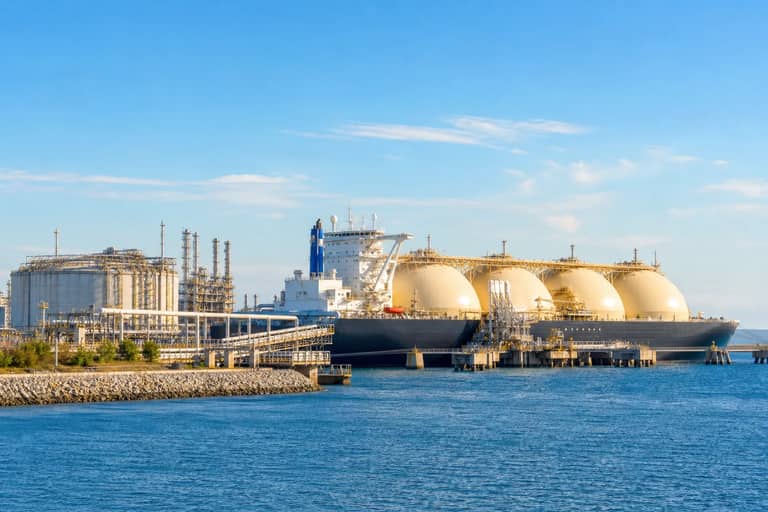
The best energy stocks right now are Exxon Mobil, Chevron, ConocoPhillips, Enbridge, EOG Resources, Williams, ONEOK and Cheniere Energy.
U.S. natural gas demand across the economy is forecast to rise 3% in 2027, with power-sector use reaching a new record. That supports a wider energy thesis than simply betting on oil prices. This list combines major producers with pipeline owners and an LNG exporter, giving investors exposure to fuel demand, transport volumes and global gas trade.
The common thread is cash generation through a choppy commodity cycle. Each pick has scale, a clear operating edge and a current financial target investors can track.
How We Picked These Stocks
This screen starts with large, liquid companies listed on a major U.S. exchange. It favors firms with recent operating cash flow, profitable assets or contracted infrastructure, and a stated capital-return or growth plan. The list spans integrated oil, exploration and production, pipelines, gas processing and LNG exports. It excludes small speculative drillers, limited partnerships with partnership tax reporting, early-stage clean-energy developers and companies whose case rests mainly on a single commodity-price call. Picks are ordered by market capitalization.
The Best Energy Stocks
Exxon Mobil (NYSE: XOM)
Why it made the list: Exxon Mobil is the broadest way to own large-scale oil, natural gas, refining and chemicals assets in one company. It earned $4.2 billion in the first quarter of 2026 and generated $8.7 billion of operating cash flow. Its size gives it more ways to fund dividends and buybacks when one part of the energy chain weakens.
The bull case: Higher output from advantaged upstream projects and steady refinery margins could keep cash generation resilient even if crude prices ease.
The risk: A prolonged fall in oil and gas prices would reduce upstream earnings and make the current pace of shareholder distributions harder to sustain.
Key number: $8.7 billion of first-quarter operating cash flow
Chevron (NYSE: CVX)
Why it made the list: Chevron combines global oil production, U.S. refining and a large new position in Guyana after completing its Hess acquisition in July 2025. First-quarter 2026 earnings were $2.2 billion, while the company kept its organic 2026 capital budget at $18 billion to $19 billion. The investment case depends on converting the larger asset base into durable free cash flow.
The bull case: Successful Hess integration and production growth in Guyana, the Permian Basin and the Gulf of America could improve cash flow without a major rise in spending.
The risk: The Hess deal raises execution demands. Lower commodity prices or weaker-than-expected Guyana production would expose the limits of that growth plan.
Key number: $18 billion to $19 billion 2026 organic capital budget
ConocoPhillips (NYSE: COP)
Why it made the list: ConocoPhillips offers direct exposure to large-scale oil and gas production, with first-quarter output of 2.309 million barrels of oil equivalent per day. It generated $5.4 billion of cash from operations before working-capital changes and plans to return 45% of cash from operations to shareholders in 2026. That makes capital discipline as important as production growth.
The bull case: Efficient Lower 48 drilling, progress at Willow in Alaska and expanding LNG interests could support free-cash-flow growth over several years.
The risk: This is the list's most direct commodity-price exposure. Its realized price per barrel of oil equivalent fell 6% year over year in the first quarter.
Key number: 45% of 2026 cash from operations targeted for shareholder returns
Enbridge (NYSE: ENB)
Why it made the list: Enbridge owns liquids pipelines, gas transmission, gas distribution and storage, which makes its earnings less tied to daily commodity prices than a producer's. It reaffirmed 2026 adjusted EBITDA guidance of C$20.2 billion to C$20.8 billion and has a C$40 billion secured backlog. The business is built around long-life assets that move or store energy.
The bull case: Projects entering service and rate increases on gas-transmission assets could support the company's target of roughly 5% annual growth after 2026.
The risk: Debt remains a real constraint. Its rolling 12-month debt-to-EBITDA ratio was 5.0 times at the end of the first quarter.
Key number: C$40 billion secured backlog
EOG Resources (NYSE: EOG)
Why it made the list: EOG stands out among independent producers for low operating costs and a mix of oil, natural gas and natural-gas liquids. It produced 1.384 million barrels of oil equivalent per day in the first quarter and generated $1.5 billion in free cash flow. Management also raised full-year oil and natural-gas-liquids production guidance without increasing its capital budget.
The bull case: More output from high-return liquids assets, combined with cash operating costs of $10.45 per barrel of oil equivalent, could protect margins better than at many peers.
The risk: EOG has less downstream protection than Exxon or Chevron. A lower oil-price cycle would flow quickly into revenue and free cash flow.
Key number: $1.5 billion of first-quarter free cash flow
Williams (NYSE: WMB)
Why it made the list: Williams is a natural-gas infrastructure company with major transmission, gathering and storage assets. First-quarter adjusted EBITDA rose 13% to $2.254 billion, helped by higher Transco rates, expansion projects and stronger storage revenue. It expects 2026 adjusted EBITDA of $8.05 billion to $8.35 billion.
The bull case: Rising gas demand from power generation and LNG exports could increase the value of pipeline capacity and storage near major demand centers.
The risk: Williams plans $7 billion to $7.6 billion of growth spending in 2026. Delays or weak returns on those projects would pressure the cash-flow story.
Key number: 2.76 times first-quarter dividend coverage
ONEOK (NYSE: OKE)
Why it made the list: ONEOK connects natural gas, natural-gas liquids, crude oil and refined products across a broad midstream system. First-quarter adjusted EBITDA rose 13% to $2.0 billion, supported by stronger volumes across several business lines. Management raised its 2026 adjusted EBITDA midpoint to $8.25 billion.
The bull case: More processing, transportation and refined-product volumes could produce earnings growth that does not require a sustained increase in commodity prices.
The risk: Recent acquisitions and expansion spending add integration and financing risk. Volume growth must remain strong enough to justify the capital program.
Key number: $8.25 billion 2026 adjusted EBITDA midpoint
Cheniere Energy (NYSE: LNG)
Why it made the list: Cheniere is the clearest large-cap U.S. export play on global LNG demand. It exported a record 187 cargoes in the first quarter and raised 2026 adjusted EBITDA guidance to $7.25 billion to $7.75 billion. Its terminals turn U.S. gas supply into fuel for overseas buyers.
The bull case: Higher production from Corpus Christi Stage 3 and continued demand for U.S. LNG could lift cash flow and support more debt reduction and buybacks.
The risk: LNG margins can move sharply with global gas spreads. Operational disruptions at Gulf Coast facilities would also have an outsized effect on results.
Key number: 187 LNG cargoes exported in the first quarter
Energy Sector Overview
Energy is no longer one trade. Oil producers remain exposed to global crude prices, which can swing on supply disruptions, inventories and economic growth. The latest government outlook expects oil inventories to build over the next year and forecasts lower average Brent crude prices in 2027. That argues against owning producers solely for a higher-price scenario.
Natural gas presents a different setup. U.S. power-sector gas use is expected to set a record next year as electricity demand rises and gas-fired capacity expands. That gives pipeline, processing, storage and LNG export companies a more structural source of volume growth. Refining also matters because fuel margins can stay firm even when crude prices fall.
The stronger energy companies can fund projects, debt service and shareholder returns across several price environments. The weaker ones need a favorable commodity tape just to meet their budgets.
What to Watch
- Exxon Mobil and Chevron second-quarter results on July 31, especially production, refinery margins and shareholder-return plans.
- EOG Resources on August 5, followed by ConocoPhillips and Cheniere Energy on August 6, for updates on capital spending, output and LNG cash flow.
- The Energy Information Administration's next Short-Term Energy Outlook on August 11, with fresh forecasts for oil inventories, gas demand and production.
The Bottom Line
This list fits investors who want broad energy exposure without relying on one oil-price forecast. Producers offer more upside if commodity prices rise. Pipeline and LNG names offer more volume-driven cash flow. Compare each company's debt, capital spending and cash-return plan before deciding which role it should play in a portfolio.
Frequently Asked Questions
What are the best energy stocks for a balanced portfolio?
Exxon Mobil, Chevron and Enbridge offer the broadest business mix in this group. Exxon and Chevron combine production with refining, while Enbridge earns from pipelines, gas distribution and storage.
Is Exxon Mobil a good energy stock for long-term investors?
Exxon Mobil is a strong large-cap choice for investors who want diversified exposure to oil, gas, refining and chemicals. Its first-quarter operating cash flow of $8.7 billion shows the scale behind its dividend, buybacks and investment program.
Which energy stocks benefit from rising natural gas demand?
Williams, ONEOK, Enbridge and Cheniere Energy are the clearest beneficiaries in this list. They move, process, store or export natural gas and related fuels rather than relying only on the price received at a wellhead.
Why is Cheniere Energy included despite reporting a quarterly net loss?
Cheniere raised its full-year adjusted EBITDA and distributable-cash-flow guidance after first-quarter LNG production improved. The key question is whether its export volumes and margins remain strong enough to deliver that higher cash-flow range.