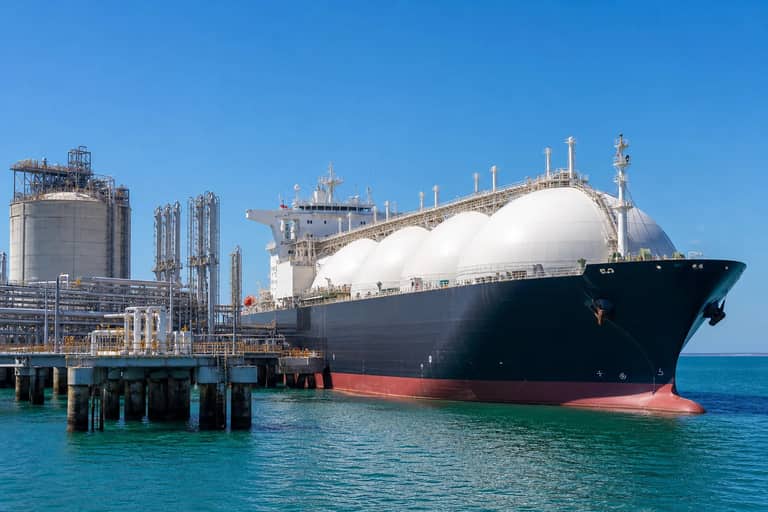
U.S. export terminals are now pulling about 18 billion cubic feet of natural gas a day to turn into liquefied natural gas, or LNG, roughly 19% more than a year ago. At the same time, new AI data centers are driving the first sustained jump in U.S. electricity demand in two decades, and much of that power comes from gas. The best natural gas stocks right now include Williams, Kinder Morgan, Cheniere Energy, EQT, Expand Energy, Antero Resources, and Range Resources. We screened producers, exporters, and pipeline operators, then narrowed the field to seven based on scale, contracted cash flow, and how directly each one profits from rising gas demand.
How We Picked These Stocks
Dozens of companies touch natural gas, so we filtered for three things. First, the business had to earn most of its money from gas, whether by drilling it, moving it, or exporting it. Second, the company had to operate at scale, with a market value above $5 billion and a leading position in its part of the chain. Third, we looked for visible, durable cash flow, either long-term export contracts, regulated pipeline fees, or low-cost reserves that stay profitable when prices fall. The result is seven companies that cover the full path of a molecule of gas, from the well to the ship.
The List
Williams Companies (NYSE: WMB)
Why it made the list: Williams owns Transco, the largest natural gas pipeline system in the country by volume. Its network connects the gas fields of Appalachia and the Gulf Coast to power plants, cities, and export terminals. Most of its revenue comes from fixed fees, not the price of gas, which makes the cash flow steady.
The bull case: Every new LNG terminal and data center needs pipelines to feed it, and Williams sits in the path of that growth. The company has a long backlog of expansion projects tied directly to Gulf Coast exports and Southeast power demand. It has also raised its dividend for years.
The risk: New pipelines face permitting delays and legal challenges that can push projects back by years.
Key number: Williams handles roughly a third of all the natural gas consumed in the United States.
Kinder Morgan (NYSE: KMI)
Why it made the list: Kinder Morgan operates about 79,000 miles of natural gas pipelines, the largest such network in North America. Like Williams, it earns most of its money from fees for moving and storing gas, so its income holds up even when prices swing. It pays one of the higher dividend yields in the group.
The bull case: Management has pointed to a growing list of projects connected to LNG exports and power plants serving data centers. That backlog turns rising gas demand into new fee-based revenue. The high yield gives investors income while those projects come online.
The risk: Kinder Morgan carries more debt than some peers, so higher interest rates raise its costs.
Key number: About 40% of the natural gas consumed in the United States moves through its pipelines.
Cheniere Energy (NYSE: LNG)
Why it made the list: Cheniere is the largest exporter of LNG in the United States and one of the biggest in the world. It runs two huge terminals, Sabine Pass in Louisiana and Corpus Christi in Texas, that chill gas into liquid and load it onto ships bound for Europe and Asia. Most of its capacity is locked into long-term contracts that run for decades.
The bull case: Cheniere is expanding Corpus Christi, with new capacity expected to start up by the end of the year. Global buyers keep signing long deals to secure American gas, which gives Cheniere predictable cash flow far into the future. The company has started returning more of that cash through buybacks and a growing dividend.
The risk: Building new terminals costs billions and takes years, and a sharp drop in global gas demand would hurt new contract pricing.
Key number: Long-term contracts cover the large majority of Cheniere's capacity into the 2040s.
EQT Corporation (NYSE: EQT)
Why it made the list: EQT is the second-largest natural gas producer in the country and the biggest in the Appalachian region. After buying pipeline operator Equitrans, it now both drills gas and moves it, which lowers its costs and steadies its margins. That integrated model is rare among producers.
The bull case: EQT owns a deep position in the Marcellus shale, one of the lowest-cost gas basins in the world. Being a low-cost producer means it can stay profitable even when gas prices are weak. New pipeline access lets it sell more gas into higher-priced Gulf Coast and export markets.
The risk: EQT's profits still rise and fall with natural gas prices, which remain volatile.
Key number: EQT produces roughly 6 billion cubic feet of natural gas a day.
Expand Energy (NASDAQ: EXE)
Why it made the list: Expand Energy is the largest natural gas producer in the United States. It was formed when Chesapeake Energy merged with Southwestern Energy and took a new name in late 2024. The company holds top-tier acreage in both the Marcellus shale in Appalachia and the Haynesville shale near the Gulf Coast.
The bull case: Its Haynesville gas sits close to the LNG terminals on the Gulf, so it can supply exports with short, cheap pipeline runs. Expand can dial production up or down depending on prices, which protects cash flow. It returns extra cash to shareholders through a base-plus-variable dividend that grows when gas prices rise.
The risk: As a pure gas producer with no pipeline or export arm, its earnings move directly with the price of gas.
Key number: Expand pumps around 7 billion cubic feet of natural gas a day, the most of any U.S. producer.
Antero Resources (NYSE: AR)
Why it made the list: Antero Resources is a major Appalachian producer with an unusual edge. It is the largest U.S. exporter of natural gas liquids, or NGLs, which are valuable fuels like propane and butane that come out of the ground alongside gas. Selling NGLs into international markets earns Antero higher prices than it would get at home.
The bull case: Antero has firm pipeline access to the Gulf Coast, so it captures premium export pricing on both gas and NGLs. Strong free cash flow, the money left after running the business and funding drilling, has let it pay down debt and buy back stock. Rising global demand for propane and LNG plays straight to its strengths.
The risk: Antero pays no regular dividend, so the return depends on buybacks and the share price.
Key number: Antero is the largest natural gas liquids exporter among U.S. producers.
Range Resources (NYSE: RRC)
Why it made the list: Range Resources pioneered drilling in the Marcellus shale and still holds one of the longest-lived acreage positions in the basin. It is a low-cost producer with decades of drilling locations already identified. That long runway is rare in an industry that often runs short of quality wells.
The bull case: Range produces both gas and NGLs, giving it two ways to win as exports grow. Its low costs mean it keeps making money through weak price stretches that hurt higher-cost rivals. A long inventory means it can grow output for years without buying new land.
The risk: Range is smaller than the majors, so its stock tends to swing harder when gas prices move.
Key number: Range reports more than 30 years of drilling inventory at its current pace.
What Is Driving Natural Gas Right Now
Three forces are pulling on U.S. natural gas at the same time. The biggest is exports. American terminals now ship more LNG than any other country, and the volume of gas flowing to them is running about 19% above last year. Europe is still working to replace Russian pipeline gas, and Asian buyers want long-term American supply, so demand for exports keeps climbing.
The second force is electricity. AI data centers use enormous amounts of power, and after twenty flat years, U.S. electricity demand is rising again. Natural gas is the fuel utilities turn to first because it can run around the clock, which ties gas demand to the same data-center boom lifting the best energy stocks and top utility names.
The third force is supply discipline. After years of overdrilling, producers have learned to hold output steady rather than flood the market. That keeps a floor under prices, even as the federal government's forecasters expect gas to stay in a moderate range this year. For investors weighing gas against crude, our guide to the best oil stocks covers the other half of the energy trade.
What to Watch
- LNG capacity startups: Cheniere's Corpus Christi expansion and other Gulf Coast terminals are due to ramp up, which would lift demand for gas from producers like Expand and EQT.
- Winter weather: A cold winter drains gas storage fast and can send prices sharply higher, while a mild one does the opposite.
- Data center power deals: New agreements to power AI campuses with natural gas would extend the demand story that supports pipeline operators Williams and Kinder Morgan.
Bottom Line
This list is built for investors who want exposure to one of the strongest demand stories in energy. Pipeline operators like Williams and Kinder Morgan offer steady, fee-based income, Cheniere offers contracted export growth, and producers like Expand, EQT, Antero, and Range offer more direct, higher-risk exposure to the price of gas. Match the pick to how much price swing you can handle, and check the live data in the table before you act.
Frequently Asked Questions
What are the best natural gas stocks to buy?
The largest and most established U.S. natural gas stocks include Williams and Kinder Morgan in pipelines, Cheniere Energy in LNG exports, and EQT, Expand Energy, Antero Resources, and Range Resources in production. Pipeline and export companies offer steadier cash flow, while producers offer more direct exposure to the price of gas.
Is natural gas a good investment right now?
Natural gas demand is rising on two fronts: record LNG exports and new electricity demand from AI data centers. That backdrop supports the companies that produce and transport gas. Prices remain volatile, though, so producers carry more risk than fee-based pipeline operators.
What is the largest natural gas producer in the United States?
Expand Energy is the largest natural gas producer in the United States, pumping roughly 7 billion cubic feet a day. It was formed in late 2024 from the merger of Chesapeake Energy and Southwestern Energy. EQT Corporation is the second-largest producer.
How can I invest in LNG exports?
The most direct way to invest in LNG exports is through Cheniere Energy, the largest U.S. LNG exporter. Pipeline companies such as Williams and Kinder Morgan also benefit, because they move the gas that feeds the export terminals.
Do natural gas stocks pay dividends?
Many do. Pipeline operators Williams and Kinder Morgan are known for steady dividends, and Kinder Morgan offers one of the higher yields in the sector. Among producers, EQT, Expand Energy, and Range Resources pay dividends, while Antero Resources returns cash mainly through stock buybacks instead.